Water pressure too high in your house? Diagnose it safely
Quick answer
If water pressure seems too high throughout the house, record downstream pressure with all fixtures off, while water is flowing, and over a water-heating cycle. A high baseline can point to supply or pressure-regulator control; a rise only after fixtures close can point to thermal expansion. Treat active leaks or hot relief-valve discharge as urgent safety issues.
Common questions
- How can I tell if my house water pressure is too high?
- Use a suitable water-pressure gauge at an undamaged downstream hose bib or approved test point. Compare the measured static, flowing, and time-lapse readings with your local plumbing requirements and the lowest limit among connected fixtures and appliances.
- Why is my water pressure suddenly high?
- Possible causes include a utility supply change, pressure-reducing valve control trouble, or a pressure rise from heated water in a closed system. The timing and gauge pattern help separate them; fixture feel alone does not.
- Can high water pressure make a water-heater relief valve leak?
- High baseline pressure or thermal expansion can contribute to relief-valve discharge, but overheating and valve problems must also be checked. Keep clear of hot discharge, never cap the outlet, and follow the water-heater manual and qualified service guidance.
Source note: Reviewed September 23, 2026 against EPA WaterSense and Portland Water service-pressure guidance plus Watts gauge, regulator, and expansion-tank instructions and a Rheem water-heater manual. Local adopted code and the exact installed-equipment instructions govern limits and work.
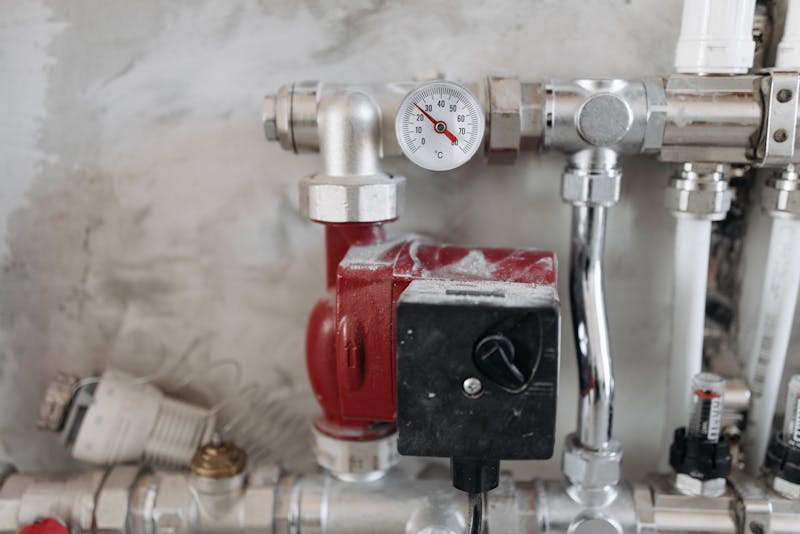
If water pressure is too high throughout your house, do not start by turning a regulator screw. First compare static pressure, flowing pressure, and the highest reading reached after fixtures close. Those three observations separate a constant supply or regulator problem from intermittent thermal expansion and fixture-specific symptoms.
Stop testing and arrange prompt help if a pipe, connector, or appliance is actively leaking. Keep clear of hot water from a water-heater relief discharge, and never cap or plug that safety outlet. If water is spreading toward electricity or a ceiling is bulging, use the emergency water shutoff guide only when the valve and route are safe to reach.
High water pressure diagnostic matrix
| What the gauge and fixtures do | Likely direction | Useful next check |
|---|---|---|
| Static and flowing pressure are both consistently high | High supply pressure, missing PRV, or a PRV set or controlling incorrectly | Confirm gauge location, ask the utility about normal supply pressure, and identify the PRV model |
| Static pressure is high but drops sharply while water flows | PRV control problem, restriction, undersized service, or demand exceeding available flow | Record one-fixture and combined-demand readings; have upstream and downstream pressure compared |
| Pressure starts normal, then slowly rises with every fixture closed | Thermal expansion in a closed system or pressure creep past a PRV | Compare the timing with the water-heater recovery cycle and expansion-control condition |
| Pressure spikes at apparently random times | Utility pressure changes, irrigation or treatment cycles, thermal expansion, or intermittent PRV behavior | Use a maximum-reading gauge and keep a time-and-equipment log |
| One faucet or shower feels forceful, but a whole-house gauge is normal | Missing aerator, wrong cartridge, fixture defect, or branch-specific issue | Inspect that fixture and compare another outlet before changing whole-house pressure |
| Pipes bang when a fast valve closes | Water hammer, loose piping, or high pressure aggravating a transient | Correct verified pressure first, then diagnose valve-closing speed, support, and arrestor placement |
| Water-heater T&P valve drips or releases hot water | Thermal expansion, high supply pressure, overheating, or a relief-valve problem | Keep clear and use the T&P relief-valve diagnostic |
This matrix classifies the pattern; it does not prove a failed component. A pressure-reducing valve can be one part of the diagnosis, but the PRV failure guide owns model-specific regulator troubleshooting.
What number counts as too high?
There is no single setting to publish for every home. The controlling limit can come from the locally adopted plumbing code, water utility, fire-sprinkler design, well equipment, building elevation, or a fixture and appliance label.
For U.S. context, EPA WaterSense recommends 45 to 60 psi incoming service pressure for efficient fixture operation and says most U.S. plumbing codes call for a PRV when supplied pressure exceeds 80 psi. Portland Water likewise says a PRV is required by its plumbing code when a home receives more than 80 psi. Those references are useful screening points, not permission to apply one universal limit in every jurisdiction.
Ask the local plumbing authority which code edition and amendments apply at the property. Then compare that requirement with the limits in the water-heater, washing-machine, dishwasher, filter, irrigation, and other connected-equipment instructions. A qualified plumber should design around the most restrictive applicable requirement.
Take three pressure readings
Use a potable-water pressure gauge whose range and connection suit the test point. Watts’ IWTG, for example, has a 0-to-200 psi scale, a 3/4-inch hose connection, and a red maximum pointer that holds the highest registered reading. Those are model-specific details; follow the instructions for the gauge you actually use.
Choose an undamaged hose bib, laundry connection, or approved test point downstream of any house PRV. Do not force a gauge onto corroded threads or leave a leaking connection unattended.
1. Static pressure
Turn off known faucets, showers, irrigation, appliances, and other water uses. Attach the gauge securely, open the test point fully as its instructions require, and record:
- Pressure, time, and test location
- Whether the water heater recently heated water
- Whether irrigation, filtration, softening, or well equipment could cycle
- Any fixture noise, seepage, or relief discharge
Static pressure is the resting baseline. One reading shows only one moment, so repeat it at comparable times if the complaint is intermittent.
2. Flowing pressure
Leave the gauge connected and open a known fixture. Record one moderate demand, then a realistic combined demand if the plumbing is stable and no leak hazard exists.
Pressure that remains unusually high during flow supports a sustained control or supply problem. A large drop from static to flowing pressure can instead indicate a restriction, undersized piping, a partly closed valve, inadequate supply, or PRV trouble. It does not, by itself, prove that the resting pressure is excessive.
3. Time-lapse maximum
Reset the maximum pointer and observe the system through normal use, including a storage water-heater recovery cycle. Note the starting pressure, peak, elapsed time, hot-water use, and what makes the reading fall again.
Do not leave a questionable test connection unattended or create a heating cycle solely for a test when the heater, relief piping, or expansion equipment appears unsafe. A landlord or maintenance worker should also record the unit, test point, tenant-reported time, and shared-building equipment that may affect the result.
Constant pressure vs. thermal expansion
A high reading before and during water use points toward the supply-pressure side of the system. Possible causes include increased municipal pressure, a missing PRV, the wrong regulator range, debris, wear, or an inappropriate setting. A plumber may need approved upstream and downstream test points to distinguish utility supply from downstream regulation.
Pressure that starts near baseline and rises only after fixtures close is a different pattern. A PRV, check valve, backflow preventer, or meter check can create a closed system. As stored water heats and expands, pressure can rise if the expansion-control method is missing, isolated, waterlogged, incorrectly precharged, or undersized.
Watts’ LF25AUB-Z3 regulator instructions use briefly opening a cold tap as one clue: pressure caused by thermal expansion immediately returns toward the set pressure. That clue is specific to a pattern, not a complete diagnosis. The water-heater expansion tank guide explains heating-cycle measurement, sizing inputs, support, and why precharge is checked only at zero water-side pressure.
Symptoms that need context
Forceful flow: A hard spray at every fixture supports a whole-house concern; one harsh faucet can have a missing aerator or fixture defect.
Leaks and shortened component life: High pressure can aggravate weak supply connectors, valves, seals, and appliances. Repair the leak and diagnose pressure; do not assume reducing pressure makes a damaged part sound again.
Banging pipes: High baseline pressure can worsen water hammer, but a bang also depends on valve-closing speed, pipe support, and system layout. The water-hammer guide separates those causes.
T&P valve discharge: Rheem’s water-heater instructions identify periodic discharge as a possible thermal-expansion symptom and state not to plug the relief outlet. A T&P valve is emergency protection, not a pressure regulator or routine expansion-control device.
Do not adjust equipment before identifying it
Regulator direction, spring range, locknut procedure, bypass behavior, and service steps vary by model. For one exact example, Watts says its LF25AUB-Z3 is factory preset to 50 psi, has a published 25-to-75 psi range, and must be verified with a gauge after adjustment. Those values and directions do not transfer to another valve.
Before any adjustment, record the manufacturer, full model and suffix, size, flow arrow, rated range, present readings, and local target. Stop when work requires opening, rebuilding, or replacing a pressurized valve; when shutoffs do not hold; or when access involves electrical, structural, or scald hazards. If replacement is supported, use the water-pressure regulator cost and quote checklist to compare complete scopes.
Give the plumber a useful handoff
Send a short observation record instead of only saying that pressure “feels high”:
- Property address or unit and whether the supply is municipal or a private well
- Gauge manufacturer, range, test location, and a photo of each reading
- Static, flowing, and maximum readings with times and water-heater status
- Whether the pattern is constant, heating-cycle related, overnight, or random
- Fixtures affected, active leaks, noises, and relief-valve symptoms
- PRV, backflow device, expansion tank, water heater, and gauge model labels
- Recent utility, meter, plumbing, irrigation, filter, or water-heater work
- Shutoff condition, safe access, tenant scheduling, and any fire-sprinkler connection
Ask for the measured upstream and downstream pressures, applicable local limit, diagnosis, proposed setting, expansion-control check, and post-work static and flowing readings in writing. That creates a repeatable before-and-after record and keeps whole-house classification separate from guessing which part to replace.
Sources and instructions checked
- EPA WaterSense: home maintenance and service pressure
- Portland Water: troubleshooting water pressure and flow
- Watts IWTG hose-connection gauge instructions
- Watts Series LF25AUB-Z3 installation instructions
- Watts PLT-35 potable expansion-tank instructions
- Rheem heat-pump water-heater use and care manual
Connect the pressure pattern to the right next check
These guides take the whole-house classification into regulator, expansion, water-heater, and emergency planning details.
- Pressure-reducing valve troubleshooting
Use repeatable downstream readings to decide whether the regulator needs adjustment, service, or replacement.
- Expansion tank symptoms and sizing
Investigate pressure that rises only while stored water heats in a closed system.
- Water-heater relief-valve diagnostic
Separate thermal expansion and supply pressure from overheating and valve problems.
- Emergency water shutoff guide
Plan a safe response if excessive pressure has already contributed to an active leak.

Flow Control HQ Editorial Team
Independent trade-focused editorial team