Main Water Line Replacement Cost: 2026 Pricing Guide
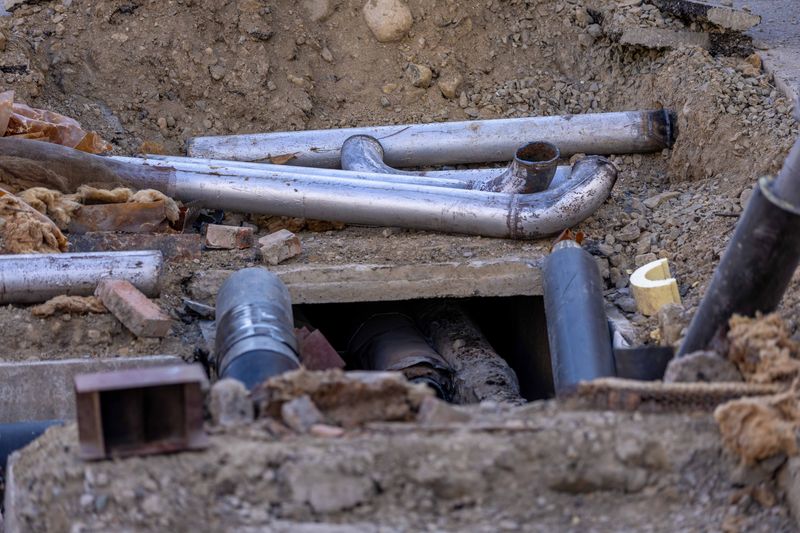
Your home’s main water line is the pipe that runs from the municipal water supply — typically the street or curb — to the point where water enters your house. When it fails, the consequences are immediate: low water pressure throughout the home, wet spots in the yard, unexplained spikes on your water bill, or no water at all. Replacement is not optional.
The cost to replace a main water line typically runs $1,500–$12,000, with most homeowners spending $3,000–$6,000 for a standard residential installation. The spread is wide because depth, distance, soil conditions, and replacement method drive costs significantly. This guide explains every factor.
Who Owns the Main Water Line?
Before spending money, it’s important to know whose responsibility the pipe is.
The water utility owns and maintains the pipe from the municipal main up to the curb stop (a shut-off valve near the street, often under a small access cover at the property line).
The homeowner owns and is responsible for the service line running from the curb stop to the house. This is the section that typically requires replacement.
When you call a plumber about a main water line problem, they’re usually talking about this homeowner-owned section — typically 20–75 feet long, though it can be much longer on rural properties or homes set far from the street.
Some utilities are actively replacing old lead service lines on their side and may offer subsidized or free replacement of the homeowner’s portion at the same time. If you’re in a municipality with an active lead service line replacement program, call your water utility before hiring a plumber.
Average Cost by Replacement Method
How the line gets replaced is the single biggest cost lever.
Open-Cut (Traditional Excavation)
A trench is dug from the street to the foundation, the old pipe is removed, and new pipe is laid. This is the most common method and works in virtually any soil and pipe condition.
Cost: $50–$150 per linear foot installed, including materials and labor
A 50-foot run at mid-range pricing: $5,000–$7,500
Open-cut is the most predictable method. Costs go up for deep trenches (over 4 feet), hard soil or rock, significant landscaping or concrete that must be cut and restored, and locations with buried utilities that slow excavation.
Horizontal Directional Drilling (HDD)
A boring machine drives a drill string underground from one access pit to another, pulling new pipe through without opening a trench. Sometimes called trenchless installation.
Cost: $60–$200 per linear foot
A 50-foot run: $6,000–$10,000
HDD is more expensive than excavation but preserves landscaping, driveways, and hardscaping that would otherwise need to be cut and restored. The premium pays for itself when the run crosses a driveway, patio, mature tree root zone, or landscaping that would cost thousands to restore after excavation.
HDD requires fairly straight runs. It’s not suitable in areas with dense underground utilities, heavy clay or rocky soil, or sharp elevation changes.
Pipe Bursting
A bursting head is pulled through the existing pipe, fracturing it outward while simultaneously pulling new pipe into place. This works when the existing pipe is intact enough to serve as a guide path.
Cost: $60–$180 per linear foot
A 50-foot run: $6,000–$9,000
Pipe bursting is trenchless and generally faster than HDD, but requires access pits at each end. It’s only viable when the old pipe isn’t completely collapsed, and some pipe materials (concrete, rigid clay with significant offset joints) don’t burst cleanly.
Cost Breakdown by Component
A complete main water line replacement includes more than just the pipe.
| Component | Typical Cost |
|---|---|
| New service pipe (materials) | $200–$800 |
| Excavation labor | $800–$3,000 |
| New shut-off valve at foundation | $150–$400 |
| Connection to meter or curb stop | $200–$600 |
| Permit | $100–$500 |
| Backfill and compaction | $200–$600 |
| Concrete/driveway restoration | $500–$3,000+ |
| Landscape restoration (sod, seed) | $200–$1,500+ |
Permit costs vary significantly by municipality. Some jurisdictions include inspections in the permit fee; others charge separately. Never skip the permit — unpermitted water service work can create problems when selling the property.
Surface restoration is where costs can spike unexpectedly. A run that crosses a concrete driveway requires cutting and patching, which adds $1,000–$3,000 depending on width and finish quality. A run through a well-established lawn might require sod and grading. Always get a line-item quote that separates restoration costs from installation.
What Material Will Be Used?
Modern water service lines use one of three main materials.
Copper is the traditional premium choice — it’s durable, corrosion-resistant in most soils, and has a 50+ year lifespan. It’s also the most expensive material.
- Cost: $2.50–$5/linear foot for Type K copper (standard for underground service)
PEX (Cross-linked polyethylene) is the most common replacement material today. It’s flexible (reducing the number of joints needed), resistant to freeze damage, and significantly less expensive than copper.
- Cost: $0.50–$2/linear foot
- PEX is not suitable in direct sunlight (UV degrades it), but underground it performs extremely well
HDPE (High-density polyethylene) is commonly used for trenchless installations because it’s flexible and can be fused in long continuous runs without joints.
- Cost: $1–$3/linear foot
The old pipe being replaced is often galvanized steel (rusty, clogged, reduced pressure), lead (health hazard, urgent priority), or clay/orangeburg (rarely used for water service, but occasionally found on very old properties).
Signs You May Need Main Water Line Replacement
The line itself is underground, so problems manifest indirectly.
Sudden or gradual pressure loss throughout the house. If water pressure at every fixture has declined and the pressure-reducing valve (PRV) is set correctly, the service line may be deteriorating internally — particularly with galvanized steel, which corrodes from the inside out and narrows over decades.
Wet spots or sinkholes in the yard. A soft, wet area in the yard that doesn’t dry out after rain (especially following the path from the street to the house) strongly suggests a leaking service line. Water follows the trench backfill path and often surfaces far from the actual leak.
Unexplained water bill increases. A line that’s leaking underground won’t always show surface evidence immediately. If your meter shows continuous usage even when everything in the house is off, the service line is a likely culprit.
Discolored or rusty water. Particularly from galvanized steel lines, but also from lines with corroded joints or aged fittings.
Water meter spinning with all fixtures closed. Turn off all water in the house, then check the meter’s low-flow indicator (usually a small triangle or dial). If it’s moving, water is escaping somewhere — either a service line leak or an interior leak.
The Lead Service Line Issue
Millions of American homes still have lead service lines — particularly those built before 1986. Lead leaches from the pipe into drinking water and poses serious health risks, especially for children.
If you suspect lead service lines, your water utility can often test the pipe material. Federal and state programs are actively funding replacement in many areas, and homeowners in affected municipalities may qualify for subsidized or free replacement of their portion of the line.
Replacing a lead service line is worth doing on its own merits regardless of whether the line is currently failing. The health case is clear; contact your water utility for available programs before paying full price.
Getting Accurate Quotes
Main water line work should always involve multiple bids.
What to include in your request:
- Property survey or rough measurements (distance from meter to house)
- Any obstacles between (driveways, landscaped areas, trees)
- Current pipe material if known
- Current pressure complaint or symptom description
What to look for in quotes:
- Permit and inspection included or itemized separately
- Material specified (type, material, diameter — standard residential service runs 3/4-inch or 1-inch)
- Surface restoration scope explicitly addressed
- Warranty on materials and labor (workmanship warranties of 1–5 years are standard)
- Whether the contractor is licensed and insured for water service work in your municipality
Questions to ask:
- Do you pull the permit, or does the homeowner?
- Who contacts 811 (Call Before You Dig) to locate existing utilities?
- Is this a trenchless or open-cut job, and why?
- What happens if you encounter unexpected rock or depth?
How to Temporarily Manage a Failing Line
If replacement can’t happen immediately, some options exist depending on the failure mode:
- Minor leaks at fittings can sometimes be repaired rather than requiring full line replacement; get a plumber’s assessment before assuming full replacement is necessary
- Galvanized lines with pressure loss can sometimes be “rodded out” to remove interior scale, though this is a temporary measure
- Pressure problems from a failing PRV (at the house entry, not in the line itself) are far cheaper to fix — confirm the actual failure point before committing to line replacement
None of these are alternatives to replacement when the line is genuinely failing, but they can buy time if scheduling or budget requires it.
2026 decision refresh
Quick decision: replace the main water line when diagnostics point to the service line itself, not a fixture, pressure-reducing valve, shutoff, or interior piping issue. The biggest cost driver is usually not the pipe; it is depth, length, access, utility conflicts, surface restoration, and whether trenchless replacement is possible.
| Symptom | Confirm before replacement | Professional boundary |
|---|---|---|
| Whole-house low pressure | Check PRV, meter, shutoffs, and interior corrosion | Do not excavate until the failure point is reasonably isolated |
| Wet spot between meter and home | Compare meter movement with all fixtures off | Call the utility if the leak may be on their side |
| Known lead service line | Ask the utility about inventory and assistance programs | Follow utility and health-agency flushing guidance after work |
| Old galvanized service | Evaluate full replacement rather than patching | Partial repairs can leave the main restriction in place |
Source note: CDC guidance directs households to their water authority when identifying lead service lines and notes that replacement work can temporarily affect exposure risk. EPA WaterSense leak resources are useful for confirming that meter movement and hidden leaks deserve prompt attention.
Related guides
- How to increase water pressure - rule out fixture, valve, and regulator causes before digging.
- How to conserve water and lower your water bill - use meter checks to separate leaks from usage changes.
- Whole-house water filter guide - consider filtration only after service-line material and water quality are understood.
- Water heater replacement worksheet - useful when main-line work is paired with pressure, expansion tank, or mechanical-room updates.
The Bottom Line
Main water line replacement is a significant expense — typically $3,000–$6,000 for a standard residential job — but it’s not optional when the line fails, and delaying replacement can mean water damage, erosion around the foundation, and dramatically higher water bills.
Get multiple bids, confirm the replacement method is appropriate for your site conditions, nail down surface restoration costs in writing, and ask about any utility or government assistance programs before signing a contract. The job, once done properly, should last 50+ years.
Document water-service scope before comparing bids
Use these resources to separate service-line work, whole-house repiping, shutoff planning, and written estimate details.
- Repiping scope checklist
Track material, access, permit, lead-line, and warranty questions across contractors.
- Plumbing repiping cost guide
Compare interior pipe replacement factors alongside exterior service-line work.
- Sewer line replacement cost guide
Keep water-supply, sewer, and excavation scopes from blending together in bids.
- Emergency water shutoff guide
Confirm shutoff locations before work that may interrupt water service.

Flow Control HQ Editorial Team
Independent trade-focused editorial team