Plumbing Repiping Cost Guide: What to Expect in 2026
A whole-house repipe is one of the larger plumbing investments a homeowner will make, but it is often necessary and ultimately beneficial. Old or failing pipes cause water pressure problems, discolored water, slow leaks inside walls, and eventually catastrophic failures. Understanding when repiping is necessary, what material options exist, and what the job actually costs helps you plan confidently and avoid being oversold.
What Is Repiping?
Repiping (also called whole-house repiping or replumbing) is the replacement of a home’s supply lines — the pipes that carry pressurized water from the main supply to every fixture in the house. It does not typically include drain lines (DWV — drain, waste, and vent), which are a separate system and rarely need wholesale replacement.
A full repipe involves:
- Opening walls, ceilings, or floors at fixture connection points
- Running entirely new supply pipe throughout the home
- Connecting new supply lines to every fixture (toilets, sinks, showers, dishwasher, washing machine, outdoor hose bibs)
- Patching and repairing access points (drywall repair is usually a separate cost)
Signs You Need to Repipe
Not every aging home needs a full repipe. Here are the genuine indicators:
Discolored or Rusty Water
Brown, orange, or reddish water — especially from the cold supply, which rules out water heater rust — indicates corrosion inside the supply pipes. If flushing the line for several minutes does not clear the discoloration, the pipes are shedding rust internally.
Frequent Leaks
If you have had two or more pinhole leaks in supply pipes within the past few years, the pipe wall is thinning from corrosion (galvanized steel) or formicary corrosion (copper). Fixing individual leaks on degraded pipe is a losing battle.
Low Water Pressure Throughout the Home
Mineral buildup and corrosion narrow the interior diameter of aging galvanized steel pipe. If you have ruled out pressure regulator failure and the municipal supply is adequate, restricted flow inside the pipes is likely the cause.
Banging or Noisy Pipes
Water hammer and noisy pipes can indicate loose strapping, but they can also signal pipes that have become rigid from calcification and can no longer absorb normal pressure transients.
Polybutylene Pipe
Polybutylene (PB) pipe — gray, plastic-looking pipe used in homes built between 1978 and 1995 — has a well-documented failure history. It is brittle, reacts with chlorine in municipal water, and deteriorates from the inside out without visible warning. If your home has polybutylene supply pipe, replacement is not optional — it is a matter of when, not if.
Galvanized Steel Pipe
Galvanized steel pipe was standard in homes built before 1960 and was still common through the 1970s. It has a lifespan of 40 to 60 years. Any galvanized pipe over 50 years old should be inspected and is likely a repiping candidate.
Pre-1986 Copper with Lead Solder Joints
Copper pipe is excellent. But copper installed before 1986 was often joined with lead-based solder, which the EPA banned in the Safe Drinking Water Act Amendments of 1986. Homes with pre-1986 copper and lead solder joints have a potential lead exposure risk, particularly if you have young children.
Pipe Material Options
Copper
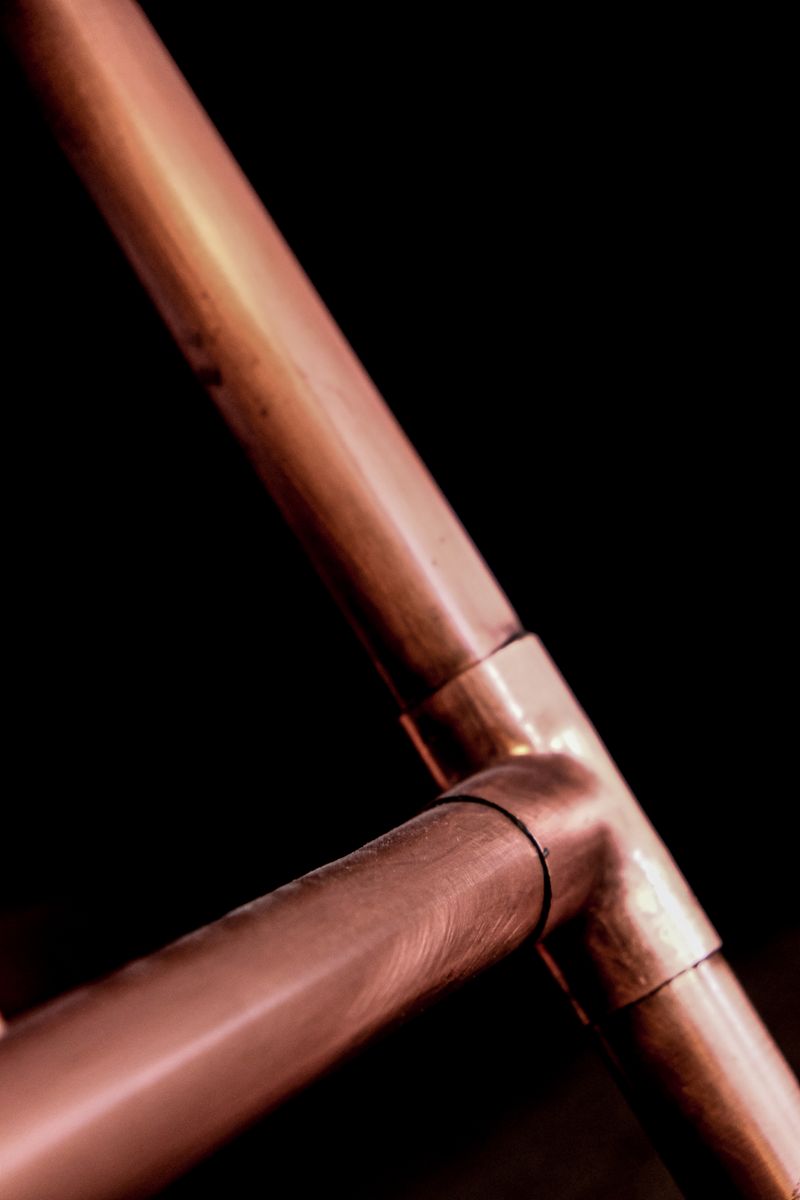
Copper has been the premium standard for residential supply pipe for decades. It is durable, heat-resistant, and has natural antimicrobial properties.
Pros:
- 50+ year lifespan when properly installed
- Resistant to UV and extreme temperatures
- Approved for all residential applications
- Well-understood by all plumbers
- Increases home resale value
Cons:
- Most expensive material
- Requires soldering skill or press-fit fittings
- Subject to pinhole corrosion in certain water chemistries (low pH, high oxygen content)
- Copper prices are volatile — cost has increased significantly since 2020
Lifespan: 50–75+ years
PEX (Cross-Linked Polyethylene)
PEX has become the dominant choice for residential repiping in North America. It is flexible, freeze-resistant, faster to install than copper, and substantially cheaper.
Pros:
- Lower material cost than copper
- Flexible — snakes through walls with fewer fittings
- Freeze-resistant (expands rather than bursting in most freeze events)
- Quieter than rigid copper
- Color-coded (red = hot, blue = cold, white = either)
- Does not corrode
Cons:
- Cannot be used outdoors or in direct sunlight (UV degrades it)
- Some municipalities had initial code restrictions (most now permit it)
- Requires proper fitting type (PEX-A with expansion fittings is superior to PEX-B with crimp fittings)
- Slightly longer lead time for permits in some jurisdictions
Lifespan: 25–50+ years (long-term data still accumulating)
PEX-A vs. PEX-B: PEX-A (Uponor/Wirsbo is the industry standard) uses expansion fittings that create an exceptionally strong joint and allows kink repair by heating the pipe. PEX-B uses crimp or clamp rings — still reliable but joints are slightly less robust. For a whole-house repipe, PEX-A with expansion fittings is worth the modest premium.
CPVC (Chlorinated Polyvinyl Chloride)
CPVC is a rigid plastic pipe approved for hot and cold supply lines. It is cheaper than copper and has been used since the 1960s.
Pros:
- Lower material cost than copper
- Does not corrode
- Approved for hot water supply (unlike standard PVC)
- No special tools needed for cutting
Cons:
- Rigid — requires more fittings than PEX, increasing labor time
- Brittle in cold temperatures; can crack during freezes
- Solvent cement joints must cure completely before pressurizing
- Some reports of joint failures over time; less preferred than PEX in new installs
- Does not fare well in earthquake-prone areas (rigid joints can crack)
Lifespan: 25–40 years
Bottom line on materials: For most homeowners doing a repipe today, PEX-A is the recommended choice — lower cost than copper, superior flexibility and freeze resistance compared to CPVC, and excellent long-term performance data. Use copper where local code requires it or where specific conditions (such as direct UV exposure on a short exterior run) make it the better option.
Whole-House Repiping Cost by Home Size
Cost Comparison Table: PEX vs. Copper vs. CPVC
| Home Size | PEX (Labor + Materials) | Copper (Labor + Materials) | CPVC (Labor + Materials) |
|---|---|---|---|
| Under 1,000 sq ft (1 bath) | $3,500–$6,000 | $6,000–$10,000 | $3,000–$5,500 |
| 1,000–1,500 sq ft (1–2 bath) | $4,500–$8,000 | $8,000–$14,000 | $4,000–$7,000 |
| 1,500–2,000 sq ft (2 bath) | $6,000–$10,000 | $10,000–$18,000 | $5,500–$9,000 |
| 2,000–2,500 sq ft (2–3 bath) | $8,000–$14,000 | $14,000–$24,000 | $7,000–$12,000 |
| 2,500–3,500 sq ft (3–4 bath) | $12,000–$20,000 | $20,000–$35,000 | $10,000–$18,000 |
| Over 3,500 sq ft (4+ bath) | $18,000–$30,000+ | $30,000–$50,000+ | $15,000–$25,000+ |
Prices are national averages for 2026. Costs vary by region, home layout complexity, and access difficulty. High-cost metro areas (NY, SF, LA, Seattle) can be 50–80% above these figures.
Cost Factors That Affect Repiping Price
Number of Fixtures
More bathrooms, more fixtures — more linear feet of pipe, more connections, and more labor time. A 4-bathroom home may have 30–40% more pipe than a 2-bathroom home of similar square footage.
Home Layout and Construction Type
- Single-story on a slab: Horizontal runs are in the attic or walls; no basement access. Difficult runs increase labor.
- Two-story: Vertical runs between floors require careful routing; wall penetrations add time.
- Crawl space homes: Relatively easy access; lower labor cost.
- Basement homes: Easy access to main runs in an unfinished basement significantly reduces labor.
- Slab-on-grade: Pipes embedded in a slab require rerouting overhead rather than in-slab, which is a significant labor addition.
Wall Repair
Plumbers open walls, ceilings, and floors to access pipe runs. They typically patch the access holes but do not perform finish work (painting, tile repair). Budget separately for:
- Drywall patching and painting: $500–$3,000 depending on holes made
- Tile repair: $200–$800 per bathroom if tile must be cut
Some plumbers use a “minimally invasive” approach — threading flexible PEX through existing runs from a few strategic access points. This reduces drywall damage but may not be possible in all layouts.
Geographic Location
Labor costs track local wages. San Francisco and New York plumbers command 60–100% more per hour than rural Midwest markets. Get multiple local quotes.
Permit Costs
Whole-house repiping requires permits in virtually all jurisdictions. Permit fees range from $100 to $800 depending on the municipality. Inspections (typically one rough-in inspection and one final) are included in the permit fee.
The Repiping Process: What to Expect
Day 1: Prep and Main Runs
The plumber shuts off the main water supply and systematically opens access points. Main trunk lines are replaced first, followed by branch lines running to each bathroom and kitchen.
Day 1–2: Branch Lines and Fixture Connections
New pipe is run from the main lines to each fixture. Hot and cold are kept separated with color-coded PEX or clearly marked copper. Connections are made at each shutoff valve location.
Final Day: Pressure Test and Inspection
Before patching walls, the system is pressurized and inspected for leaks. A licensed plumber will typically hold pressure for 30–60 minutes and check every connection. The inspector from the municipality visits to sign off on the rough-in.
Post-Repipe: Drywall and Finish
Your contractor (separate from the plumber, unless they offer this service) patches drywall, retextures, and paints. Allow 2–4 weeks for a complete finish-out including painting and tile touch-ups.
Total disruption timeline: Most whole-house repipes take 2–5 days of active plumbing work, during which water is shut off for large portions of each day. Some plumbers restore water at night; others suggest temporary accommodations for large jobs.
How to Choose a Repiping Contractor
What to Look For
- Licensed master plumber on staff (not just a licensed company with unlicensed workers)
- Specific repiping experience — ask how many whole-house repipes they do per year
- Material quality commitment — confirm PEX-A with expansion fittings, or Type L or Type M copper
- Permit included — any contractor who suggests skipping the permit is a red flag
- Written warranty — minimum 1 year on labor; some offer 5 years
- References from recent repipe jobs
Comparing Estimates
Request at least three written estimates for any repiping project. Provide the same information to each:
- Year of home construction
- Square footage
- Number of bathrooms
- Current pipe material
- Crawl space, basement, or slab construction
Ask each contractor to specify the material, fitting type, and whether drywall repair is included. Comparing apples to apples is difficult if the scope differs.
Is Repiping Worth It?
A whole-house repipe is a significant investment, but consider the alternatives:
- Chronic leak repairs at $200–$600 per incident, several times per year
- Water damage from a burst pipe: $5,000–$50,000+ depending on location and duration
- Health risk from lead solder or degraded pipe material in drinking water
- Insurance issues — some insurers will not write or renew policies on homes with polybutylene or galvanized pipe
A repipe also increases home value. Buyers and home inspectors flag old or problem pipe immediately; updated plumbing is a genuine selling point and can eliminate a negotiation discount of $5,000–$15,000 on an older home.
For most homeowners in homes over 40 years old with original galvanized or polybutylene supply lines, repiping is not a matter of if — it is a matter of when. Planning it on your schedule is far less painful than responding to a crisis.
2026 decision refresh
Quick decision: repiping is justified when the existing supply piping is unreliable, unsafe, or repeatedly damaging the home. Do not choose material on price alone; choose it by water chemistry, access, code acceptance, installer experience, and how much wall repair the project will require.
| Existing condition | Practical next step | Why it matters |
|---|---|---|
| Galvanized steel with low pressure | Confirm restriction with fixture and main-line checks | Interior corrosion can make spot repairs temporary |
| Polybutylene supply lines | Plan whole-home replacement rather than repeated repairs | Failure history and insurance concerns often drive the decision |
| Lead service or lead solder concern | Contact the water utility and review testing options | Public-health guidance favors verified identification and replacement planning |
| Frequent pinhole leaks | Test water chemistry and ask about copper vs PEX | Aggressive water can shorten copper life if not addressed |
Source note: EPA WaterSense leak guidance reinforces that small leaks waste real water, while CDC lead-in-water guidance points homeowners back to the water authority for identifying and replacing lead service lines. For drinking-water concerns, do not rely on visual pipe age alone.
Related guides
- How much does a plumber cost? - use it to sanity-check labor and trip charges.
- PEX vs copper vs CPVC pipe comparison - compare material tradeoffs before selecting a repipe bid.
- How to shut off water in an emergency - essential prep before any major plumbing work.
- Water heater replacement worksheet - helpful if the repipe also changes water-heater connections, valves, or expansion tank layout.
Clarify the whole repiping scope
These related resources help compare pipe replacement bids, service-line questions, and water shutoff planning.
- Repiping scope checklist
Use the checklist to compare materials, access openings, permits, patching, and warranties.
- Main water line replacement cost
Separate interior repiping from service-line work and utility-side questions.
- Sewer line replacement cost guide
Compare water-supply work with drain and sewer replacement scope.
- How to increase water pressure
Use symptom notes to decide whether old piping may be one part of the issue.

Flow Control HQ Editorial Team
Independent trade-focused editorial team