Trenchless sewer repair vs. excavation: how to choose
Quick answer
Choose a sewer repair method from the defect and site constraints, not from the word trenchless. CIPP lines the existing route, pipe bursting pulls in a replacement pipe, and open excavation exposes the pipe directly; each still requires defined access, connection work, permits, testing, and restoration.
Common questions
- Is trenchless sewer repair always better than excavation?
- No. It can reduce surface disturbance, but pipe condition, grade, bends, connections, access, soil, utilities, and local approval determine whether lining or bursting is appropriate.
- What is the difference between CIPP and pipe bursting?
- CIPP cures a new liner inside the host pipe. Pipe bursting fractures or splits the old pipe while pulling a separate replacement pipe into its path. Their access and design requirements differ.
- Can trenchless repair fix a sewer belly?
- A liner generally follows the existing route, and NASSCO notes that pipe bursting retains the existing line and grade. If grade correction is the goal, excavation or a redesigned route may be necessary.
Source note: Reviewed August 6, 2026 against NASSCO rehabilitation guidance, EPA trenchless fact sheets, Seattle utility repair descriptions, and NIOSH CIPP safety information. Product design and local approval remain project-specific.
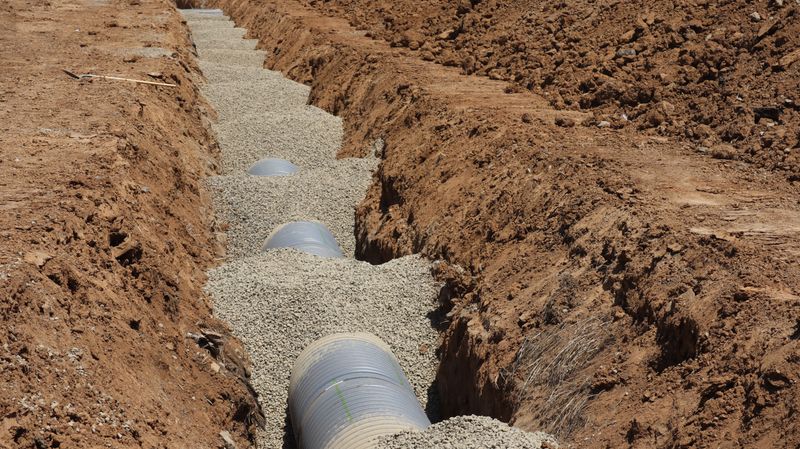
“Trenchless” describes a family of methods, not a guarantee that no digging will occur. CIPP lining, pipe bursting, and open excavation solve different pipe problems. The defensible choice starts with a clear camera inspection, mapped defects, and a quote that includes access, connections, testing, and surface restoration.
If you have only a verbal diagnosis, begin with a documented sewer camera inspection. A contractor cannot responsibly select a rehabilitation system without knowing the host pipe’s material, diameter, shape, bends, condition, connections, and accessible length.
The three repair paths in plain language
CIPP lining
Cured-in-place pipe uses a resin-saturated tube that is installed inside the existing pipe and cured to form a close-fitting pipe within it. NASSCO describes CIPP as a method for localized or longer rehabilitation that can address defects such as cracks, leaks, and corrosion.
CIPP depends on a prepared route and a project-specific design. The line normally must be cleaned, inspected, and open enough for installation. Connections may need to be reopened or separately sealed. Ask how the liner thickness, resin, cure method, host-pipe assumptions, and service connections are specified.
Pipe bursting
Pipe bursting pulls a bursting head through the old pipe, fractures or splits it outward, and draws a new pipe behind the tool. It is a replacement method, not a coating. NASSCO notes that it can replace severely deteriorated pipe and may allow upsizing under suitable conditions.
The method still needs launch and receiving access. Soil, depth, nearby utilities, bends, pipe material, service connections, pull length, and allowable ground movement can limit the design. The existing alignment and grade generally remain.
Open excavation
Open-cut work exposes the existing pipe so the contractor can remove it, correct bedding or grade, change the route, rebuild connections, and inspect surrounding soil. It creates the most direct access but can disturb hardscape, landscaping, floors, streets, or other improvements.
Excavation may be the clearest choice when the pipe has collapsed, shifted, flattened, lost grade, or conflicts with utilities—or when a local point repair is more rational than mobilizing a trenchless system.
Compare applicability, not slogans
| Decision factor | CIPP lining | Pipe bursting | Open excavation |
|---|---|---|---|
| What is installed | A liner inside the host pipe | A separate replacement pipe in the old alignment | A directly placed replacement or repair |
| Typical surface access | Existing access plus possible pits or connection work | Launch and receiving pits plus connection access | Continuous or localized trench/access opening |
| Host pipe role | Provides the installation path; design may account for deterioration | Guides the bursting tool and replacement route | Removed or directly repaired |
| Grade correction | Generally follows existing grade | Existing line and grade remain | Can rebuild bedding, slope, and route |
| Capacity effect | Reduces inside diameter but may improve flow surface | May maintain or increase nominal size when site conditions permit | Can resize or reroute within design constraints |
| Connections | Must be identified, reopened, and/or separately sealed | Must be located and reconnected | Directly visible during the open work |
| Restoration | Often less surface restoration, not zero | Pits and connection areas require restoration | Largest potential restoration scope |
This table is a screening tool, not an engineering design. A listed capability does not prove that a particular property is suitable.
Conditions that can rule a method in or out
Ask the contractor to address each of these in writing:
- Collapse or blockage: Can the installation equipment pass, and how will the route be restored first?
- Belly or reverse grade: Will the proposed method simply preserve the low spot?
- Diameter and deformation: Is there enough opening for cleaning, liner installation, or a bursting head?
- Bends and transitions: What is the system’s allowable geometry, and where does material or diameter change?
- Service connections: How many exist, where are they, and how will each be reconnected and verified?
- Access: Are cleanouts, manholes, pits, indoor floor openings, or street permits needed? Use the sewer cleanout guide to distinguish existing access from proposed excavation.
- Utilities and structures: How were gas, electric, water, communication lines, foundations, retaining walls, and trees located?
- Host-pipe material: Can it be cleaned or burst safely, and are there hazardous-material procedures?
- Flow control: Will sewer service be interrupted or bypassed, and how will sanitation be protected?
- Local approval: Is the exact system accepted by the authority having jurisdiction, and what inspections are required?
Compare complete quotes line by line
The sewer line replacement guide explains broad project scope. For a method comparison, require these specific line items:
- Preconstruction CCTV file and defect/connection log
- Surveyed or located alignment, depths, access points, and utilities
- Cleaning and host-pipe preparation
- Engineered or manufacturer-supported product design and stated assumptions
- Launch, receiving, cleanout, or connection excavations
- Flow diversion and occupant-use restrictions
- Reconnection of every branch or lateral
- Permits, traffic control, utility coordination, and inspections
- Post-installation CCTV and any leak, deflection, cure, or material testing
- Concrete, flooring, landscaping, paving, irrigation, and interior restoration
- Waste handling, cleanup, and warranty terms
Do not compare a liner-only proposal with an excavation proposal that includes permits and restoration. Normalize the scope first. There is no trustworthy universal price range: site access and restoration can outweigh the pipe-installation method.
CIPP safety and occupant questions
CIPP is manufactured at the job site using resin, curing energy, and installation equipment. NIOSH has documented potential worker exposure concerns associated with CIPP work. Homeowners should not improvise controls, but they should ask the contractor:
- What resin and cure process will be used?
- What manufacturer safety data and installation instructions apply?
- How will workers, occupants, pets, air intakes, and nearby spaces be protected?
- Where will process exhaust, water, condensate, or waste be managed?
- When can connected fixtures and occupied areas be used again?
- What records demonstrate the liner was cured and accepted as designed?
The answers should be project-specific and consistent with local environmental, workplace, and plumbing requirements.
A decision sequence that avoids rework
- Stabilize any backup and determine whether maintenance can restore service. See main sewer clog symptoms and snaking versus hydro jetting.
- Obtain complete pre-work CCTV and surface locations.
- Define the defect: blockage, joint, root entry, crack, corrosion, deformation, collapse, or grade problem.
- Ask at least two qualified bidders to explain why their method fits that defect and which conditions would make it unsuitable.
- Compare a single written scope covering preparation through restoration.
- Confirm permits, product approvals, inspection hold points, and warranty before work.
- Retain post-work CCTV and acceptance records.
The right method is the one that corrects the documented failure with manageable access and verifiable results—not necessarily the option with the smallest equipment footprint.
Sources and standards checked
Build the sewer repair scope from verified conditions
These guides connect camera evidence, access, cleaning, replacement scope, and buried-pipe quote questions.
- Sewer camera inspection checklist
Require complete footage, mapped defects, and documented access limits before method selection.
- Sewer line replacement scope
Compare permits, access, connections, restoration, and warranty across bids.
- Find the sewer cleanout
Document existing access separately from launch or receiving pits.
- Drain snake vs. hydro jetting
Separate preparation and maintenance work from structural rehabilitation.

Flow Control HQ Editorial Team
Independent trade-focused editorial team