Sewer smell in bathroom: safe checks and symptom guide
Quick answer
A sewer smell in a bathroom most often points to an open path from the drainage system, such as a dry trap, failed toilet seal, loose connection, or damaged pipe, but drain buildup and sulfur-smelling water can mimic it. Identify the fixture and condition that correlate with the odor; odor strength alone cannot identify the gas, source, or concentration.
Common questions
- Why does the sewer smell in my bathroom come and go?
- Intermittent odor can follow fixture use, trap evaporation, pressure changes, weather, or occupancy. Log what ran, which fixture was strongest, and whether a trap-water level, gurgle, or slow drain changed at the same time; the timing is evidence, not proof of one cause.
- Can I pour water down a drain to stop sewer smell?
- If a seldom-used fixture drains normally and has no backup, adding clean water can restore an evaporated trap seal. If the odor returns quickly, the trap will not hold water, or another fixture makes it gurgle, stop repeating the step and have the trap, drain, and venting checked.
- Is a sewer smell in the bathroom dangerous?
- Odor alone cannot tell you which gas is present or at what concentration. Leave an enclosed area if the odor is overwhelming or anyone has headache, dizziness, nausea, drowsiness, breathing trouble, or eye or throat irritation, and call the fire department or emergency services from a safe location.
Source note: Checked September 14, 2026 against the 2024 International Plumbing Code trap and vent provisions, Wisconsin DHS and OSHA sewer-gas safety guidance, a county sewer-odor advisory, and Oatey toilet-seal guidance. The adopted local code, fixture instructions, and an on-site diagnosis control repairs.
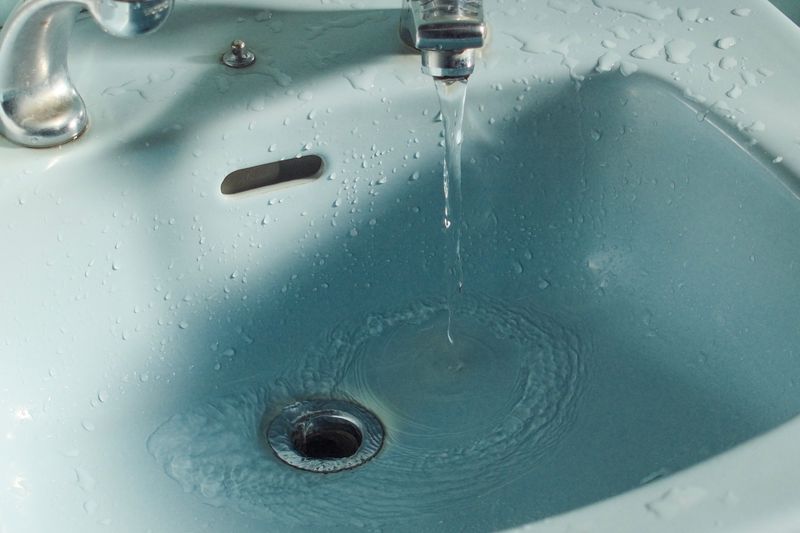
A sewer smell in a bathroom usually means odorous air has found a path past a water-filled trap, toilet seal, fitting, or damaged drain pipe. However, residue in a sink overflow or drain and sulfur-smelling water can produce a similar complaint. Find the fixture and the condition that coincide with the odor before choosing a repair.
Do not use your nose as a gas detector. Sewer gas can contain hazardous and flammable components, and OSHA warns that the sense of smell can stop detecting hydrogen sulfide. If an odor is overwhelming in an enclosed space, or anyone develops headache, dizziness, nausea, drowsiness, breathing trouble, or eye or throat irritation, leave the area. From a safe location, call the fire department or emergency services and avoid flames, smoking, or electrical switches near the suspected area.
Bathroom sewer-smell diagnostic matrix
Use this matrix to choose a safe observation, not to make a final diagnosis.
| Pattern you observe | What it may point toward | Safe next observation |
|---|---|---|
| Odor follows days or weeks when a sink, shower, tub, or floor drain was unused | An evaporated trap seal | If the fixture drains normally, add clean water and note whether the odor stops and how long it stays away |
| Odor is strongest at one sink, especially while water runs | Material around the stopper, drain opening, or overflow; an accessible trap or joint problem; or odor in the water itself | Smell a glass of cold water away from the sink, then inspect visible surfaces and accessible joints without dismantling them |
| Odor is strongest at a shower or tub after use | Drain residue, a trap-seal problem, or a concealed connection issue | Note whether water drains normally, whether the odor starts before or after flow, and whether the fixture was recently unused |
| Odor is strongest at the toilet base, with movement during normal use, staining, or moisture | A compromised toilet-to-flange seal, fastening problem, or flange condition | Do not deliberately rock or remove the toilet; photograph the base and note recent flooring or toilet work |
| Another fixture makes a drain gurgle or visibly changes toilet-bowl or trap water | A drain or vent pressure problem | Record which fixture was running and which fixture reacted, then use the vent-vs-drain symptom guide |
| Several drains slow, or wastewater rises in a shower, tub, or floor drain | A branch or main sewer restriction | Stop using connected water and follow the main sewer clog warning signs |
| Odor appears after rain, during hot weather, or on windy days | A useful weather correlation, but not one proven cause | Record rainfall, temperature, wind, rooms affected, and whether plumbing use changed; give the pattern to a plumber |
| A glass of water smells away from the fixture | A water-side issue rather than odor entering only through that drain | Compare cold and hot water at another faucet and review the home water-testing guide |
Safe checks by fixture
Seldom-used sink, shower, tub, or floor drain
Fixture traps retain liquid to separate occupied rooms from the drainage system. The 2024 International Plumbing Code requires separately trapped fixtures and addresses protection where a trap seal is subject to evaporation, but your jurisdiction’s adopted code and amendments control.
If a seldom-used fixture drains freely and there is no backup, add clean water and note how long the odor stays away. A fast return, visible loss of water, or reaction when another fixture drains needs plumbing diagnosis; repeatedly adding water does not repair a leak or venting defect.
Bathroom sink and overflow
Determine whether the odor follows the water or the drain. Fill a clean glass with cold water, carry it away from the sink, and smell it there. Repeat safely with hot water. Odor that follows the glass shifts the investigation to the water supply, water heater, or building water system.
If the water does not smell, inspect the stopper, drain rim, overflow opening, and cabinet below. Residue can create a foul odor; dampness, corrosion, or staining at a joint supports a service call. Clean only accessible surfaces using the fixture instructions. Never mix cleaning chemicals.
Shower or bathtub
Note whether the odor is present before water runs, begins during flow, or appears after the fixture drains. Also record drainage speed and any gurgle. That timing helps separate an unused trap, surface residue, and a pressure-related reaction without opening the drain system.
Do not remove a concealed trap, force tools through the drain, or use chemicals as a test.
Toilet base
A toilet has its own internal trap, while a gasket seals the toilet outlet to the floor flange. Oatey lists bad smells, water around the base, and a rocking or unsteady toilet among signs associated with a failed wax ring. Those signs justify inspection, but odor alone does not prove the ring failed.
Do not deliberately rock the bowl. If it moves during normal use, leaks, or sits unevenly after flooring or service, stop using it when leakage is present and arrange repair.
What “comes and goes” tells you
Intermittent sewer smell is a timing clue, not a diagnosis. Record whether it follows:
- A bathroom sitting unused
- A toilet flush, shower, washer discharge, or other high-flow event
- Rain, heat, wind, or a rapid weather change
- A recent cleaning, remodel, toilet reset, or flooring project
- An exhaust fan, HVAC cycle, or occupancy pattern
Do not treat rain as proof that the city sewer, septic system, or roof vent is at fault. Give the plumber the fixture behavior as well as the weather note.
Keep a short odor observation log
Relative descriptions such as “faint” or “overwhelming” do not measure concentration or safety.
| Record | Example detail |
|---|---|
| Date, time, and duration | September 14, 7:10 a.m.; about five minutes |
| Exact location | Guest bath; strongest near shower drain |
| Activity just before it | First shower after 12 days unused |
| Fixture behavior | Normal drain speed; no gurgle; toilet water unchanged |
| Other rooms affected | Hall bath and kitchen normal |
| Weather and occupancy | Heavy rain overnight; exhaust fan running |
| Safe action and result | Added clean water earlier; odor returned after 10 days |
| Recent work or products | Toilet reset last month; no drain chemicals used |
Photograph staining, moisture, fixture labels, and the room layout. Record a gurgle only without prolonging exposure or causing a backup.
When to stop checking and call
Arrange prompt qualified help when:
- The smell is persistent, spreads beyond one fixture, or quickly returns after a dry trap is refilled
- A toilet moves, leaks, or shows staining at the base
- A trap will not retain water or another fixture changes its level
- Gurgling, slow drains, or cross-fixture reactions repeat
- Plumbing is concealed, damaged, or recently altered
- Anyone has already used drain cleaner or another chemical
- The suspected work involves a roof, vent entry, smoke test, cleanout opening, sewer, septic tank, or confined space
If wastewater rises, stop using connected water, keep people and pets away, and do not open a cleanout that may be holding wastewater. After the hazard is controlled, the sewer camera service checklist can help define usable video, location references, access limits, and a written interpretation.
Plumber and landlord handoff checklist
Give the contractor or property manager:
- The room, fixture, first occurrence, frequency, and duration
- What was running immediately before each event
- Whether the bathroom had been unused and whether added water changed the odor
- Any slow drainage, gurgling, trap-water movement, toilet movement, moisture, or backup
- Cold-water versus hot-water glass observations away from the drain
- Weather correlation without assuming the cause
- Recent plumbing, roofing, flooring, remodeling, or vacancy
- Every cleaner or chemical already placed in a fixture
- Photos, plumbing plans, and prior invoices if available
Ask what was inspected, what reproduced the symptom, the likely entry path, testing limits, and the smallest supported repair. Camera or smoke testing should answer a defined question under qualified, locally compliant conditions.
Landlords should preserve the tenant’s dates and symptoms and not close a report because the odor was absent during one visit. Once scope is defined, review what changes a plumber’s service cost without treating national figures as a quote.
Next step: turn the pattern into a defined service call
Send the log before the appointment and ask what access or testing the plumber expects. Show where the odor is strongest, what precedes it, what the fixtures do, and what safe observation changed it so the plumber can distinguish trap, fixture seal, drain, vent, water, and sewer paths.
Sources and safety guidance
- International Code Council: 2024 IPC Chapter 10, Traps, Interceptors and Separators
- International Code Council: 2024 IPC Chapter 9, Vents
- Wisconsin Department of Health Services: Sewer gas
- OSHA: Hydrogen sulfide overview
- Greene County, Ohio: Household sewer FAQs
- Oatey: Toilet wax-ring failure signs and replacement guidance
Bottom line
A sewer smell in the bathroom is a reason to find the entry pattern, not to trust odor intensity or assume the vent is clogged. Refill a normally draining, seldom-used trap; compare water away from the drain; document fixture reactions; and stop when sewage, symptoms, a strong enclosed-space odor, chemicals, or inaccessible plumbing makes the investigation unsafe.

Flow Control HQ Editorial Team
Independent trade-focused editorial team