How to Test Your Water Quality at Home
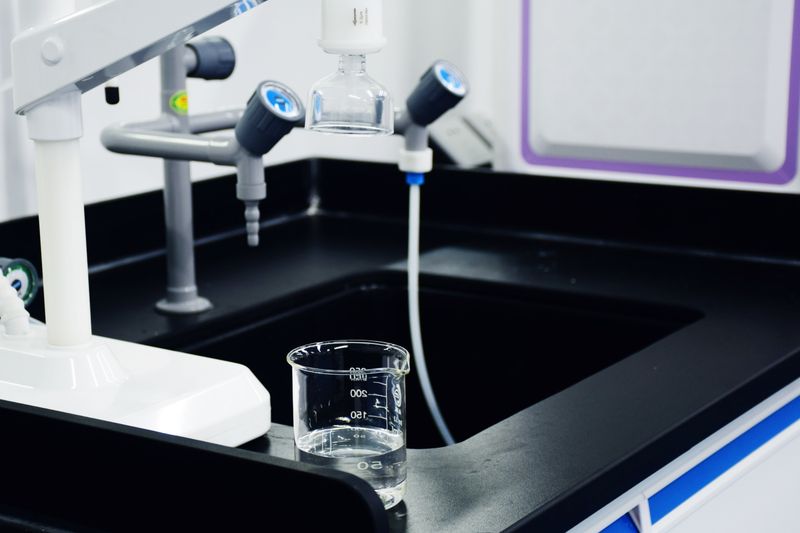
You cannot see most water contaminants. Lead has no taste. Nitrates are colorless and odorless. Certain bacteria leave no sign at all. The only reliable way to know what is in your water is to test it — yet most homeowners never do.
This guide explains every testing method available, from simple dip strips to certified lab analysis, what each test reveals, how to interpret results, and what to do when a contaminant is found. Whether you are on city water or a private well, testing your water is the first step toward making informed decisions about filtration.
Who Should Test Their Water
Municipal water users: Your utility publishes an annual Consumer Confidence Report (CCR) — also called a Water Quality Report — which lists detected contaminants and their levels. But the CCR measures water at the treatment plant, not at your tap. Lead from aging service lines, corrosion in household plumbing, or contamination from water main breaks can affect water quality between the plant and your glass.
Well water users: The EPA recommends testing private well water annually, and more frequently after:
- Flooding events
- Changes in water taste, color, or odor
- Nearby agriculture, industrial activity, or construction
- Illness in the household with no identified cause
- Changes in the local geology or land use
New homeowners: Always test water in a new home before relying on any existing filtration system. The previous owners may have left filters well past their service life.
Post-filter owners: Test water both before and after a filtration system to verify the filter is actually working.
Testing Methods: An Overview
There are four primary methods for testing residential water quality, each with different coverage, accuracy, and cost.
1. TDS Meters (Total Dissolved Solids)
What they measure: The total concentration of dissolved inorganic solids in water — minerals, salts, metals — expressed in parts per million (ppm) or milligrams per liter (mg/L). These two units are equivalent at residential concentrations.
What they do NOT measure: TDS meters are not contaminant-specific. A high TDS reading tells you dissolved solids are present; it does not tell you which ones. Safe hard water and dangerous lead contamination can produce similar TDS readings. TDS meters are useful for monitoring filtration system performance, not for identifying specific contaminants.
When to use a TDS meter:
- To establish a baseline before and after filter installation
- To monitor RO membrane performance over time (rising output TDS indicates membrane degradation)
- To compare bottled water, tap water, and filtered water
EPA and WHO guidance: The EPA secondary standard for TDS is 500 ppm (a non-enforceable aesthetic standard). The WHO recommends below 300 ppm for ideal taste. Most municipal water falls between 50–300 ppm. RO-filtered water typically reads 10–50 ppm.
Recommended TDS meters:
HM Digital TDS-EZ Water Quality Tester — The most widely used entry-level TDS pen. Reads 0–9,990 ppm with ±2% accuracy. Runs on two 1.5V batteries (included). Best value for basic RO system monitoring.
Apera Instruments AI209 pH/TDS/Conductivity/Temperature Meter — A step up in accuracy and capability. Tests pH (important for corrosivity and lead leaching), TDS, electrical conductivity, and temperature. Ideal for comprehensive home water monitoring.
HM Digital COM-100 EC/TDS/Temperature Meter — A more rugged dual-range instrument suitable for well water testing where TDS may exceed 1,000 ppm.
2. Home Water Test Kits (Dip Strips and Chemical Reagent Tests)
What they measure: Specific parameters depending on the kit. Most kits cover 10–16 parameters including: total hardness, total chlorine, free chlorine, nitrates, nitrites, pH, iron, copper, lead, and bacteria (coliforms).
How dip strips work: You dip the strip into a water sample for 1–2 seconds, then compare the resulting color to a reference chart after waiting the specified time (usually 30–60 seconds). Results are qualitative or semi-quantitative — they tell you whether a contaminant is present and approximately how much, but not the precise concentration.
How chemical reagent tests work: You add a measured reagent to a water sample in a test vial, shake, and compare color. These are slightly more accurate than dip strips and often more specific.
Advantages: Fast (results in under 5 minutes), inexpensive ($15–$50), no shipping required.
Limitations: Less precise than lab testing. Bacteria tests require 24–48 hours of incubation. Color interpretation can be subjective under different lighting conditions.
Recommended home test kits:
Drinking Water Test Kit by TestAssured — Tests 16 parameters including bacteria, lead, pesticides, nitrates, chlorine, pH, and hardness. Includes all materials needed for one complete test plus bacteria test supplies for 10 tests. Good starting point for municipal water users.
Safe Home Premium Well Water Test Kit — Tests 50 parameters and is specifically designed for well water. Includes mail-in lab analysis for bacteria, metals, and organic chemicals alongside at-home dip tests for immediate parameters. One of the most comprehensive consumer-grade kits available.
JNW Direct 16-in-1 Water Test Strips — 150 test strips covering 16 parameters per strip. Best value for ongoing monitoring or for testing multiple taps. Not a substitute for full lab analysis but useful for routine checks.
3. Mail-In Laboratory Testing
What it measures: Anything you specify — complete inorganic panels, bacteria panels, metals, VOCs, pesticides, PFAS/PFOA, pharmaceutical compounds, and more. Lab tests provide precise quantitative results (exact ppm concentrations).
How it works:
- Purchase a certified lab test kit online or through a local water quality supplier.
- Follow the collection instructions precisely — most kits include sterile sample bottles, collection instructions, and a prepaid shipping label.
- Collect your sample at the correct tap (first-draw vs. flushed) as instructed.
- Ship the sample on the day of collection.
- Receive results online or by mail within 5–10 business days.
Cost: $50–$300 depending on the number of parameters. A basic bacteria + nitrate panel is around $50–$75. A comprehensive metals panel (testing for lead, arsenic, cadmium, chromium, mercury, and others) runs $100–$150. Full-spectrum VOC and organic chemical testing can reach $200–$300.
Recommended lab test services:
National Testing Laboratories WaterCheck Test — One of the most respected mail-in services. The WaterCheck City Water test covers 93 parameters; the WaterCheck with Pesticides covers 154 parameters. Results are compared against EPA Maximum Contaminant Levels (MCLs) with clear pass/fail indicators.
Tap Score Home Water Testing — A newer service with an excellent online results platform that explains each finding in plain language and recommends specific filtration solutions based on your results.
When lab testing is essential:
- Lead concerns (especially pre-1986 homes with lead solder or service lines)
- Arsenic (common in certain geological regions and private wells)
- PFAS/PFOA contamination (particularly near military bases, airports, or industrial sites)
- Pesticides and herbicides (near agriculture)
- VOCs (near gas stations, dry cleaners, or industrial facilities)
- Any situation where a health decision depends on precise contaminant levels
4. Utility Water Quality Reports (Consumer Confidence Reports)
Every community water system serving 25 or more people is required by the EPA to publish an annual CCR by July 1 each year. These reports list:
- Water source(s) and any source water assessment results
- All detected contaminants and their measured levels
- The EPA Maximum Contaminant Level (MCL) for each listed substance
- A comparison of detected levels vs. MCLs
- Health effects for contaminants found above MCLs
How to access your CCR: Search your water utility’s name at epa.gov/ccr, or contact your water utility directly. Most utilities also post CCRs on their websites.
CCR limitations:
- Reflects treatment plant output, not your tap
- Does not account for lead service lines or household plumbing
- May not include newer contaminants like PFAS that have only recently been regulated
- Annual averages can mask short-term spikes
Use the CCR as background information, not as a substitute for tap-level testing.
How to Collect a Water Sample Correctly
Incorrect sample collection is the most common source of inaccurate home test results.
For lead and first-draw metals testing:
- Do not run the water before collecting. Use the tap that has been sitting unused for at least 6 hours (typically first thing in the morning).
- Remove the aerator from the faucet and set aside — do not rinse.
- Fill the sample bottle to the indicated line without touching the inside of the bottle or cap to any surface.
- This “first-draw” sample captures lead and metals that have leached from plumbing sitting in contact with water overnight.
For bacteria testing:
- Use the sterile bottle provided with the test kit.
- Flame-sterilize a metal faucet tip with a lighter for 30 seconds if possible, or wipe with an alcohol pad included in the kit.
- Let the water run for 1–2 minutes before collecting.
- Do not touch the inside of the bottle or cap.
- Cap immediately and refrigerate until shipping (ship the same day).
For general chemical testing:
- Run the cold water for 2 minutes before collecting.
- Fill sample bottles per the kit instructions.
Understanding Your Results
Reading Against EPA Standards
The EPA sets two types of drinking water standards:
- Maximum Contaminant Levels (MCLs): Legally enforceable limits for specific contaminants in public water systems. Examples: Lead MCL = 0.015 mg/L (15 ppb, action level); Nitrate MCL = 10 mg/L; Arsenic MCL = 0.010 mg/L.
- Secondary Maximum Contaminant Levels (SMCLs): Non-enforceable aesthetic guidelines. Examples: pH SMCL = 6.5–8.5; TDS SMCL = 500 mg/L; Iron SMCL = 0.3 mg/L.
Any exceedance of an MCL warrants immediate action. SMCLs above their limits are not health threats but indicate water that may damage plumbing, stain fixtures, or taste poor.
Key Parameters and What They Mean
| Parameter | Ideal Level | Action Threshold | Main Concern |
|---|---|---|---|
| pH | 6.5–8.5 | Below 6.5 or above 8.5 | Corrosive water leaches lead and copper |
| TDS | 50–300 ppm | Above 500 ppm | Aesthetic; taste and appliance scaling |
| Hardness | 0–60 mg/L (soft) | Above 120 mg/L | Scale buildup in appliances and pipes |
| Lead | 0 ppb (ideal) | Above 15 ppb | Neurological damage, especially in children |
| Nitrates | Below 5 mg/L | Above 10 mg/L | Methemoglobinemia in infants |
| Iron | Below 0.1 mg/L | Above 0.3 mg/L | Staining, taste, appliance damage |
| Total Coliform | 0 CFU/100mL | Any detection | Indicator of microbial contamination |
| E. coli | 0 CFU/100mL | Any detection | Fecal contamination; serious health risk |
| Chlorine | 0.2–1.0 mg/L | Above 4.0 mg/L | MCL is 4 ppm; taste/odor issues lower |
| PFAS (combined) | 0 (ideal) | Above 4 ppt (EPA MCL) | Cancer, immune, developmental effects |
What To Do When Contaminants Exceed Safe Levels
Lead above 15 ppb:
- Do not drink or cook with tap water until resolved.
- Identify and replace lead service lines or lead solder in household plumbing.
- Install an NSF/ANSI 53-certified filter rated for lead removal (certain activated carbon block filters, or RO systems).
Nitrates above 10 mg/L:
- Do not use for infant formula or give to infants under 6 months.
- RO systems or anion exchange systems effectively remove nitrates.
Bacteria detected:
- Do not drink until the source is identified and resolved.
- Shock-chlorinate the well (for well water).
- Boil water until testing confirms bacteria-free results.
- Install a UV purifier for ongoing protection.
High hardness (above 120 mg/L / 7 grains per gallon):
- Install a water softener (ion exchange system) to protect appliances and plumbing.
High iron (above 0.3 mg/L):
- Iron type matters: ferrous (dissolved) iron requires oxidation; ferric (particulate) iron requires sediment filtration. Test kits can distinguish between the two.
Building a Testing Routine
For municipal water users:
- Read the annual CCR when published.
- Test for lead every 2–3 years, especially if the home was built before 1986.
- Run a basic 10–16 parameter home test kit annually.
- Use a TDS meter monthly to monitor any installed filtration system.
For well water users:
- Annual testing for bacteria (coliform and E. coli), nitrates, pH, and TDS at minimum.
- Every 3 years: full metals panel, VOCs, and pesticides/herbicides.
- After any flooding or nearby contamination event: bacteria test immediately.
- Keep records of all tests and results for trend analysis.
Recommended Testing Products at a Glance
| Product | Type | Parameters | Best For |
|---|---|---|---|
| HM Digital TDS-EZ | TDS meter | TDS only | RO system monitoring |
| Apera AI209 | Multi-parameter meter | TDS, pH, EC | Comprehensive monitoring |
| TestAssured 16-Parameter Kit | Home dip test | 16 parameters | Municipal water screening |
| Safe Home Premium Well Kit | Home + lab hybrid | 50 parameters | Well water comprehensive test |
| National Testing Labs WaterCheck | Mail-in lab | 93–154 parameters | Definitive contaminant analysis |
| Tap Score | Mail-in lab | Custom panels | Detailed lab results with recommendations |
Final Thoughts
Testing your water is not an exercise in paranoia — it is basic home maintenance. Knowing what is in your water allows you to choose the right filtration technology, avoid wasting money on filters that target contaminants you don’t have, and protect your family from risks that are invisible to the naked eye.
Start with a TDS meter for a quick baseline, run a comprehensive home test kit or mail-in lab analysis once a year, and refer to your utility’s CCR for annual context. If results raise concerns, use the EPA’s contaminant-specific guidance to select the appropriate treatment. Water quality problems are almost always solvable once you know what you are dealing with.
Turn water-test results into the right treatment path
These resources help compare point-of-use RO, whole-house filtration, pitcher filters, and shutoff notes after you know the water-quality concern.
- Reverse osmosis installation guide
Use RO when certified contaminant-reduction claims match the water problem.
- Whole-house water filter guide
Compare treatment at the point of entry when sediment, odor, or hardness affects more than drinking water.
- Water filter pitcher comparison
Check whether a low-cost point-of-use filter is enough for taste and odor complaints.
- Sink fixture and filter fit worksheet
Turn water-test goals into under-sink, point-of-use, or whole-house installation notes.

Flow Control HQ Editorial Team
Independent trade-focused editorial team