Best Tankless Water Heaters of 2026: Buyer's Guide
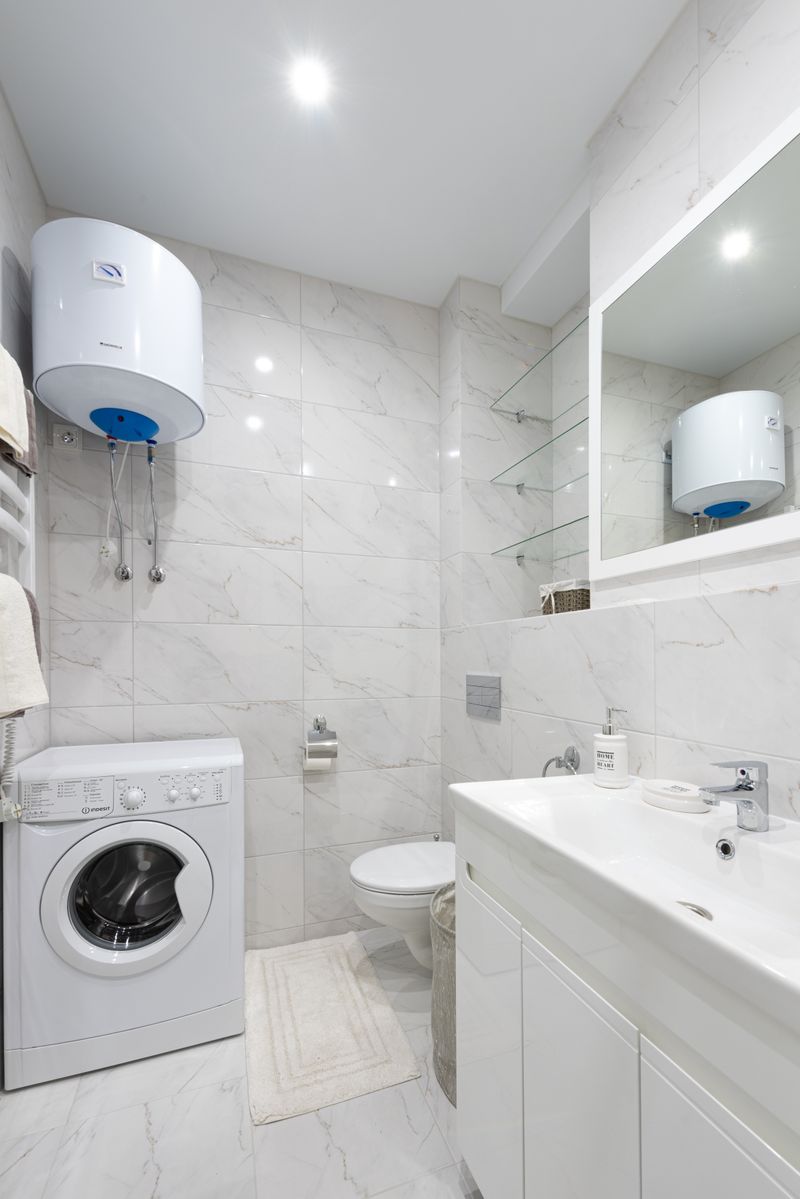
A tankless water heater that’s undersized for your household delivers lukewarm showers the moment a second tap opens. One that’s far too powerful for your needs wastes money upfront and leaves you with a gas line you don’t need. Most homeowners only think about their water heater when it fails — and then discover that the switch to tankless involves more decisions than a straight swap.
This guide covers every major variable: flow rate, fuel type, venting, and efficiency ratings. We identify the best picks from Rinnai, Navien, Rheem, Noritz, and Stiebel Eltron so you can match a unit to your home’s actual hot water demand.
What to Know Before You Buy
Flow Rate (GPM) Is the Critical Spec
Tankless water heaters are rated in gallons per minute (GPM) — the volume of hot water they can deliver simultaneously. Unlike tank heaters, which store a fixed supply, tankless units produce hot water only while it’s being drawn. If demand exceeds the unit’s GPM rating, water temperature drops.
Estimate your peak simultaneous usage to size correctly:
- Shower: 1.5–2.5 GPM
- Bathroom faucet: 0.5–1 GPM
- Kitchen faucet: 1–2 GPM
- Dishwasher: 1–2 GPM
- Washing machine (hot): 1.5–3 GPM
A household running two showers simultaneously needs at least 4–5 GPM. A larger home with three bathrooms in active use may require 7–9 GPM or more, particularly in cold climates where incoming groundwater temperature is lower.
Cold climate penalty: The colder your incoming water, the more work the heater must do to reach your set temperature — and the lower its effective GPM output. A unit rated 9.5 GPM at a 35°F rise may only deliver 6 GPM at a 70°F rise. Always check the manufacturer’s GPM rating at your region’s groundwater temperature.
Gas vs. Electric
Gas tankless heaters (natural gas or propane) are the dominant choice for whole-house systems. They deliver higher flow rates — typically 6–11 GPM — and are better suited to large households with high simultaneous demand. Gas units require a gas line of adequate size and proper venting.
Electric tankless heaters are simpler to install and require no venting, but they demand substantial electrical capacity — whole-house units typically require 150–200 amps of dedicated service. For most older homes, that means a panel upgrade. Electric units work well for point-of-use applications (under a sink, a single bathroom) where their lower flow rates are sufficient.
Unless your home lacks gas service, a gas unit is the better choice for whole-house hot water.
Condensing vs. Non-Condensing Gas
Non-condensing tankless heaters (the standard type) exhaust hot flue gases through stainless steel or Category III venting. They are efficient — typically 80–84% UEF — but their exhaust is hot enough to require specialized, often expensive, venting materials.
Condensing units (Rinnai RU series, Navien NPE series, Rheem Prestige series) extract additional heat from flue gases by condensing the water vapor in the exhaust stream. This raises efficiency to 94–96% UEF and produces cooler exhaust that can be vented through PVC or CPVC pipe — cheaper and easier to run than metal venting. The condensate (acidic water) must be drained, typically to a nearby floor drain or utility sink.
Condensing units cost more upfront but save on both energy and venting materials. In most new installations where long venting runs are needed, the lower venting material cost partially offsets the higher unit price.
Venting Configuration
- Indoor units with power venting: Use a blower to force exhaust out through a single pipe, drawing combustion air from the room. Simpler to install in confined spaces but requires indoor combustion air.
- Direct vent (2-pipe): Dedicated intake and exhaust pipes, typically run through an exterior wall. Sealed combustion draws outside air, improving efficiency and safety.
- Outdoor units: No venting required — the unit is installed outside. Requires freeze protection in cold climates.
Most modern gas tankless installs use a 2-pipe direct vent configuration.
UEF (Uniform Energy Factor)
The UEF rating measures how efficiently a water heater converts fuel to usable hot water. Higher is better.
- Standard gas tankless: 0.81–0.87 UEF
- Condensing gas tankless: 0.93–0.96 UEF
- Electric tankless: 0.93–0.99 UEF (no combustion losses)
A condensing unit with 0.96 UEF will save meaningful money over a non-condensing 0.82 UEF unit across a 15–20 year lifespan, particularly with natural gas at current rates.
Best Gas Tankless Water Heaters
1. Rinnai RU199iN
Best premium condensing gas tankless heater
The RU199iN is Rinnai’s flagship condensing residential unit and the water heater most plumbers would install in their own home. At 9.8 GPM, it handles two showers and a dishwasher running simultaneously without complaint. The 0.96 UEF makes it one of the most efficient gas water heaters available. Wi-Fi connectivity (via optional Control-R module) lets you adjust temperature and monitor operation from your phone.
Specifications:
- Fuel: Natural gas (propane version: RU199iP)
- Flow rate: 9.8 GPM (at 35°F rise)
- UEF: 0.96
- Type: Condensing, indoor direct vent
- Venting: PVC/CPVC (2-pipe)
- Freeze protection: Built-in
- Wi-Fi: Optional (Control-R module)
- Warranty: 12-year heat exchanger, 5-year parts, 1-year labor
What to know: The RU199iN requires a ¾-inch gas line running at adequate pressure — verify this before purchase. Installation is more complex than non-condensing units due to the condensate drain requirement, but the PVC venting saves significantly on materials compared to stainless venting for non-condensing models.
Rinnai RU199iN
2. Navien NPE-240A2
Best for large homes and high-demand households
Navien’s NPE-240A2 leads the residential market in flow rate at 11.2 GPM — the highest available in a single residential unit. If you have a large home with multiple bathrooms in regular simultaneous use, this is the only unit that comfortably covers peak demand without temperature drop. The built-in recirculation pump (compatible with dedicated recirculation lines or comfort flow systems) eliminates the wait for hot water at distant fixtures.
Specifications:
- Fuel: Natural gas (propane version: NPE-240A2P)
- Flow rate: 11.2 GPM (at 35°F rise)
- UEF: 0.97
- Type: Condensing, indoor direct vent
- Venting: PVC/CPVC (2-pipe)
- Recirculation: Built-in pump with timer/demand mode
- Freeze protection: Built-in
- Warranty: 15-year heat exchanger, 5-year parts, 1-year labor
What to know: The NPE-240A2 requires a 1-inch gas supply line to deliver full rated flow — a smaller line will throttle output under heavy load. Navien’s NaviLink Wi-Fi module is sold separately. The 15-year heat exchanger warranty is the best in its class.
Navien NPE-240A2
3. Rheem RTGH-95DVLN
Best overall value gas tankless heater
Rheem’s RTGH-95DVLN delivers 9.5 GPM at condensing efficiency (0.93 UEF) at a price point meaningfully below the Rinnai RU199iN. It covers whole-house demand for most 3-bedroom homes without the premium brand markup. Installation is straightforward, and Rheem’s dealer network means service availability is strong nationwide.
Specifications:
- Fuel: Natural gas (propane version: RTGH-95DVLP)
- Flow rate: 9.5 GPM (at 35°F rise)
- UEF: 0.93
- Type: Condensing, indoor direct vent
- Venting: PVC/CPVC (2-pipe)
- Freeze protection: Built-in
- Warranty: 12-year heat exchanger, 5-year parts, 1-year labor
What to know: The RTGH-95DVLN does not include built-in recirculation — add a compatible external pump if hot water wait time at distant fixtures is a concern. For households that simply need reliable whole-house hot water without premium features, this unit is the most practical value in the condensing gas category.
Rheem RTGH-95DVLN
4. Rinnai V75iN
Best non-condensing mid-range option
The Rinnai V75iN is the right choice when a condensing unit isn’t justified — short venting runs, replacement of an existing non-condensing system, or a smaller household that doesn’t need 9+ GPM. At 7.5 GPM and 0.82 UEF, it handles a 2–3 bathroom home with moderate simultaneous demand. The non-condensing design keeps the unit price lower and eliminates the condensate drain requirement.
Specifications:
- Fuel: Natural gas (propane version: V75iP)
- Flow rate: 7.5 GPM (at 35°F rise)
- UEF: 0.82
- Type: Non-condensing, indoor direct vent
- Venting: Stainless steel Category III (2-pipe)
- Freeze protection: Built-in
- Warranty: 12-year heat exchanger, 5-year parts, 1-year labor
Installation note: Non-condensing units require stainless steel venting, which is more expensive per foot than PVC. If your venting run exceeds 20–30 feet, the higher venting material cost may make a condensing unit more economical in total.
Rinnai V75iN
5. Noritz NRC98-DV
Best choice for cold-climate households
Noritz builds a strong case in northern climates where incoming groundwater temperatures are low and effective GPM ratings suffer most. The NRC98-DV is rated 9.8 GPM at a 35°F rise but maintains strong output even at larger temperature differentials, making it better suited to sustained cold-climate performance than some competitors’ ratings suggest. The built-in recirculation compatibility and solid 0.96 UEF round out a competitive specification.
Specifications:
- Fuel: Natural gas (propane version: NRC98-DV-P)
- Flow rate: 9.8 GPM (at 35°F rise)
- UEF: 0.96
- Type: Condensing, indoor direct vent
- Venting: PVC/CPVC (2-pipe)
- Recirculation: Compatible (external pump)
- Freeze protection: Built-in
- Warranty: 12-year heat exchanger, 5-year parts, 1-year labor
Noritz NRC98-DV
Best Electric Tankless Water Heaters
6. Stiebel Eltron Tempra 36 Plus
Best whole-house electric tankless heater
Stiebel Eltron is the German brand that effectively invented modern electric tankless technology, and the Tempra 36 Plus remains the benchmark for whole-house electric performance. At 7.0 GPM in warmer climates (lower in cold regions with colder groundwater), it covers a 2-bathroom household comfortably. The Advanced Flow Control automatically modulates temperature when demand approaches the unit’s limit — rather than delivering cold water when overwhelmed, it reduces flow to maintain set temperature.
Specifications:
- Power: 36 kW (requires 3 × 50A/240V circuits)
- Flow rate: 7.0 GPM (at 35°F rise), 4.1 GPM (at 70°F rise)
- UEF: 0.99
- Venting: None required
- Advanced Flow Control: Yes (modulates flow to maintain temperature)
- Warranty: 7-year tank, 3-year parts
What to know: The 36 kW electrical demand requires a 200A service panel with available capacity — older homes with 100A or 150A panels typically need an upgrade before installing a whole-house electric unit. The lack of venting and the 0.99 UEF make ongoing operating costs competitive, but panel upgrade costs can be significant.
Stiebel Eltron Tempra 36 Plus
7. EcoSmart ECO 27
Best budget electric tankless heater
For households with adequate electrical capacity and moderate hot water needs, the EcoSmart ECO 27 delivers 27 kW performance at one of the lowest price points in the category. It is not a whole-house solution for large households or cold climates, but for a small home or apartment with one bathroom, it handles daily hot water demand reliably.
Specifications:
- Power: 27 kW (requires 3 × 40A/240V circuits)
- Flow rate: 3.5–6.5 GPM (varies by incoming water temperature)
- UEF: 0.97
- Self-modulating technology: Adjusts power to demand
- Warranty: Limited lifetime on heating elements, 1 year on other parts
What to know: EcoSmart’s “lifetime” warranty on heating elements applies to the original purchaser and covers replacement elements only. The self-modulating technology is a genuine feature — the unit only draws the power it needs, which keeps operating costs reasonable for intermittent use.
EcoSmart ECO 27
Tankless Water Heater Comparison Table
| Model | Fuel | GPM (35°F rise) | UEF | Condensing | Recirculation | Warranty (HX) | Price Range |
|---|---|---|---|---|---|---|---|
| Rinnai RU199iN | Gas | 9.8 | 0.96 | Yes | Optional | 12 yr | $900–$1,200 |
| Navien NPE-240A2 | Gas | 11.2 | 0.97 | Yes | Built-in | 15 yr | $1,100–$1,400 |
| Rheem RTGH-95DVLN | Gas | 9.5 | 0.93 | Yes | No | 12 yr | $800–$1,000 |
| Rinnai V75iN | Gas | 7.5 | 0.82 | No | No | 12 yr | $700–$900 |
| Noritz NRC98-DV | Gas | 9.8 | 0.96 | Yes | Compatible | 12 yr | $900–$1,200 |
| Stiebel Eltron Tempra 36 Plus | Electric | 7.0 | 0.99 | N/A | No | 7 yr | $600–$750 |
| EcoSmart ECO 27 | Electric | 3.5–6.5 | 0.97 | N/A | No | Lifetime (elements) | $200–$280 |
How Much Does Tankless Water Heater Installation Cost?
Installation cost varies significantly based on fuel type, whether you’re replacing an existing tankless system or converting from a tank, and local labor rates.
Gas tankless installation:
- Replacing an existing tankless unit (same configuration): $200–$500 in labor
- Converting from a tank water heater to tankless: $500–$1,500, depending on gas line upgrades and venting runs
- Gas line upgrade (if required): $200–$800 additional
Electric tankless installation:
- Point-of-use electric: $100–$250 in labor
- Whole-house electric (panel upgrade included): $1,000–$3,000 total
DIY installation: Gas tankless installation should be performed by a licensed plumber and gas fitter. Many jurisdictions require permits and inspection. Electric tankless installation requires a licensed electrician for panel work. Attempting DIY installation without proper credentials can void manufacturer warranties and create safety hazards.
For a detailed breakdown of water heater costs, see our complete plumbing cost guide.
Tankless Water Heater Maintenance
Unlike tank water heaters, tankless units require minimal maintenance — but not zero.
Annual descaling (hard water areas): Hard water leaves mineral deposits on heat exchanger surfaces that reduce efficiency and can damage the unit over time. In areas with water hardness above 7 grains per gallon, annual flushing with a descaling solution is recommended. A recirculation pump kit makes this easier. In soft water areas, every 2–3 years is sufficient.
Inlet filter cleaning: Most tankless units include a small screen filter on the cold water inlet. Clean it annually to maintain flow rate.
Freeze protection: Even units with built-in freeze protection can be damaged by extended power outages in extreme cold. If you leave for an extended period in winter, shut off the water supply and drain the unit, or install a backup power source.
Vent inspection: Annual inspection of the vent pipes for debris, corrosion, or blockage. Outdoor units should have their combustion air intakes checked seasonally.
For more detail on keeping your water heater running efficiently, see our water heater maintenance guide.
Final Picks by Situation
- Best for most 3-bedroom homes: Rheem RTGH-95DVLN — solid condensing performance at the most practical price point
- Best premium whole-house gas: Rinnai RU199iN — top efficiency, built-in reliability, excellent warranty
- Best for large homes (4+ bedrooms): Navien NPE-240A2 — highest residential flow rate available, built-in recirculation
- Best non-condensing (short venting runs): Rinnai V75iN — reliable, lower upfront cost, proven track record
- Best cold-climate performance: Noritz NRC98-DV — strong sustained output in low groundwater temperature conditions
- Best whole-house electric: Stiebel Eltron Tempra 36 Plus — best-in-class flow control, 0.99 UEF
- Best budget electric: EcoSmart ECO 27 — affordable entry point for small homes with adequate electrical capacity

Flow Control HQ Editorial Team
Independent trade-focused editorial team