Whole House Water Filter Guide
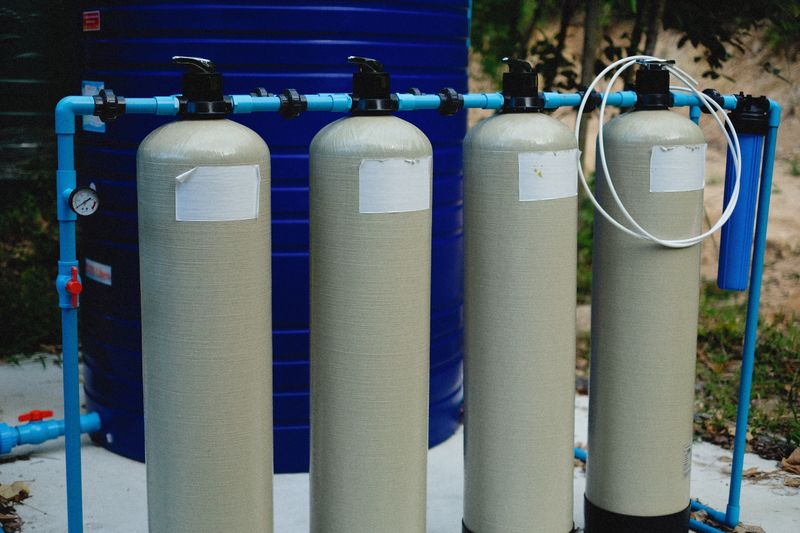
Point-of-use filters like pitcher filters and under-sink reverse osmosis systems treat the water at a single tap. Whole house water filters — also called point-of-entry (POE) systems — treat all the water entering your home before it reaches any faucet, shower, appliance, or ice maker. That means filtered water for drinking, cooking, bathing, laundry, and everything in between.
Whether you are dealing with hard water sediment clogging appliances, chlorine drying out skin and hair in the shower, or elevated iron staining fixtures, a whole house filter addresses the problem at the source. This guide walks through every major system type, how to compare them, what they cost, and which products deliver the best value.
Why Whole House Filtration Matters
Most Americans on municipal water assume their tap water is clean because it passes EPA standards. But legal compliance is not the same as purity. Common concerns include:
- Chlorine and chloramines: Added by utilities for disinfection, but associated with dry skin, hair damage, and unpleasant taste and odor throughout the home.
- Sediment and particulates: Rust from aging infrastructure, sand, and silt enter supply lines — especially in older neighborhoods and after water main work.
- Hard water minerals: Calcium and magnesium scale buildup damages water heaters, dishwashers, washing machines, and reduces fixture lifespan.
- Iron and manganese: Common in well water; causes orange-brown staining on fixtures, laundry, and dishes.
- Bacteria and viruses: Well water users in particular face microbial contamination risk after flooding or infrastructure events.
A correctly matched whole house system neutralizes the primary contaminants affecting your specific water supply.
Know Your Water Before You Buy
The single most important step before purchasing any whole house filter is testing your water. Without a baseline, you risk buying the wrong system.
Recommended home test kits:
Safe Home Premium Well Water Test Kit — Tests 50+ parameters including bacteria, heavy metals, nitrates, and hardness. Ideal for well water users.
Drinking Water Test Kit by TestAssured — A more affordable 16-parameter kit covering the most common municipal water concerns.
For comprehensive analysis, send a sample to a state-certified lab. The EPA maintains a database of certified labs at epa.gov. Lab testing runs $75–$200 depending on the number of parameters tested, but it gives you exact contaminant concentrations that dictate filter selection.
Key parameters to test:
- TDS (total dissolved solids)
- Hardness (as grains per gallon or mg/L of CaCO3)
- Iron (total, ferrous, and ferric)
- pH
- Chlorine/chloramine levels
- Bacteria (coliform and E. coli) — especially for well water
- Nitrates and nitrites
- Lead and copper (older homes)
Types of Whole House Filtration Systems
1. Sediment Filters
What they remove: Dirt, rust, sand, silt, and other physical particles.
How they work: Water passes through a porous filter medium — typically spun polypropylene or pleated polyester — rated to a specific micron level. A 5-micron filter stops particles 5 microns and larger; a 1-micron filter is finer. Sediment filters are almost always the first stage in any multi-stage system.
Best for: Homes with visibly discolored water, well water users, homes with older galvanized or iron pipes.
Limitations: Does not remove dissolved chemicals, chlorine, or biological contaminants.
Flow rate: Sediment-only housings typically impose minimal flow restriction — most 4.5 x 20-inch “big blue” housings support 15–25 GPM, suitable for a 3–4 bathroom home.
Product recommendation: iSpring WGB21B 2-Stage Whole House Water Filtration System — Combines a 5-micron sediment pre-filter with a carbon block filter in a high-flow 4.5 x 20-inch housing. Handles 15 GPM.
Filter replacement: Every 3–6 months for the sediment stage depending on sediment load.
2. Activated Carbon Filters
What they remove: Chlorine, chloramines, VOCs (volatile organic compounds), herbicides, pesticides, PFAS (with specialized carbon), hydrogen sulfide (rotten egg odor), and taste/odor compounds.
How they work: Water flows through granular activated carbon (GAC) or a carbon block. The enormous surface area of activated carbon (1 gram has roughly 500 m2 of surface area) adsorbs organic compounds and chlorine.
Carbon block vs. GAC:
- Carbon block: Denser, more surface contact, better at removing smaller particles and chloramines; slightly more flow restriction.
- GAC: Higher flow rate with less pressure drop; better for high-flow whole-house applications.
Best for: Municipal water users dealing with chlorine/chloramine taste, odor, or VOC concerns.
Product recommendation: Aquasana EQ-1000 Whole House Filter System — A popular 3-stage system (sediment + activated carbon + post-filter) rated for 1,000,000 gallons or 10 years. Excellent chlorine and VOC reduction without the filter change frequency of budget systems.
3. UV Purification Systems
What they remove: Bacteria, viruses, protozoa (including Giardia and Cryptosporidium).
How they work: Water flows past an ultraviolet lamp that emits UV-C light at 254 nm, disrupting the DNA of microorganisms and preventing them from reproducing. UV systems do not add chemicals and leave no byproducts.
Critical caveat: UV is only effective on clear water. Turbidity, iron, or sediment shields microorganisms from UV light. Always install a sediment filter and iron filter upstream of a UV system.
Best for: Well water users, homes in areas with boil-water advisories, or any situation where microbial contamination is a concern.
Product recommendation: Pentair Pelican UV-4 Ultraviolet Water Sterilization System — Treats up to 4 GPM (sufficient for 1–2 bathroom homes). For larger homes, the UV-8 model handles 8 GPM.
UV lamp replacement: Every 12 months regardless of water quality — UV lamp output degrades over time even if it still glows.
4. Iron and Manganese Filters
What they remove: Ferrous (dissolved) iron, ferric (particulate) iron, and manganese.
How they work: Most use an oxidizing filter media (birm, greensand, or Filox) that converts dissolved ferrous iron into solid ferric iron, which is then captured by the filter. Some use air injection to oxidize iron before filtration.
Best for: Well water users with orange staining on fixtures, laundry, or appliances.
Important: Iron filter sizing depends on iron concentration (ppm), water hardness, and flow rate. Consult the manufacturer’s sizing guide before purchasing.
Product recommendation: Aqua-Pure AP904 Whole House Filtration System — Handles up to 20 GPM. Compatible with a range of filter media for customized contaminant removal.
5. Multi-Stage Whole House Systems
The most comprehensive approach combines multiple filtration technologies in sequence:
Typical multi-stage sequence:
- Sediment pre-filter (20 or 5 micron) — removes large particles
- Iron/manganese filter — removes metals before carbon
- Activated carbon filter — removes chlorine, VOCs, organics
- UV purifier — kills bacteria and viruses
- Post-sediment or scale-reduction filter (optional)
Top multi-stage system recommendations:
Springwell CF1 Whole House Water Filter System — A high-end 4-stage system using catalytic carbon and KDF media. Rated for 9 GPM (1–3 bathrooms), with a 12 GPM model available. Filter media lasts approximately 1,000,000 gallons before replacement. Excellent for municipal water with chloramine treatment.
iSpring WGB32B 3-Stage Whole House Water Filtration System — A more budget-friendly 3-stage system using a 5-micron sediment filter, a carbon block, and an iron/manganese reduction filter. Handles 15 GPM. Filter cartridges are widely available.
Sizing a Whole House System
Peak Flow Rate
The system’s flow rate must meet the home’s simultaneous demand. Undersized systems cause noticeable pressure drops.
Estimate peak demand by counting fixtures that could run simultaneously:
- Each shower: 2.0–2.5 GPM
- Each toilet (filling): 1.5–3.0 GPM
- Kitchen faucet: 1.5–2.0 GPM
- Washing machine: 3.0–5.0 GPM
- Dishwasher: 1.0–1.5 GPM
General guidelines:
- 1–2 bathrooms: 10 GPM minimum
- 3–4 bathrooms: 15 GPM
- 5+ bathrooms: 20 GPM or higher
Pipe Size and Connection
Standard whole house filter housings connect to 1-inch or 1.25-inch supply lines. Most homes have 3/4-inch or 1-inch main supply lines. Use reducing fittings if needed. Installing larger housings (4.5 x 20 inch “big blue”) on 3/4-inch lines creates a bottleneck — resize the supply line if possible for the 2–3 feet around the filter housing.
Filter Capacity and Maintenance Frequency
Manufacturers rate filter capacity in gallons. A 4.5 x 20-inch carbon block filter typically handles 100,000–150,000 gallons before exhaustion. At 300 gallons per day (a typical 4-person household), that is roughly 11–14 months of service.
Budget for:
- Sediment pre-filter: $15–$30 every 3–6 months
- Carbon filter cartridge: $30–$80 every 9–15 months
- UV lamp: $30–$60 every 12 months
- Iron/media filter backwash media: $50–$150 every 5–7 years
Installation Overview
Whole house filters install on the main cold water supply line after the main shutoff valve but before the water heater and any branch lines. The typical installation sequence:
- Shut off the main water supply and drain the line by opening a low faucet.
- Cut the supply line at the chosen installation point. Use a pipe cutter for clean cuts.
- Install isolation valves on both sides of the filter housing — these allow filter changes without shutting off the whole house.
- Install a bypass valve if the manufacturer provides one. This lets you temporarily route unfiltered water around the filter during maintenance.
- Mount the filter housing bracket to a stud or solid backing on a wall adjacent to the supply line.
- Connect the inlet and outlet with the appropriate fittings (typically compression, push-to-connect, or threaded, depending on the system).
- Insert filters into their housings per the sequence in the manual.
- Restore water slowly. Check for leaks. Open a nearby faucet to purge air before full pressurization.
- Flush the system per manufacturer instructions — typically 5–15 minutes for carbon filters to clear carbon fines.
Professional installation costs $200–$500 depending on complexity and your area. For well-water systems with iron filters and UV units, budget $400–$800 installed.
Comparing System Costs
| System Type | Unit Cost | Annual Maintenance | Best For |
|---|---|---|---|
| Single-stage sediment | $40–$100 | $20–$40 | Well water, sediment only |
| Single-stage carbon | $80–$200 | $30–$60 | Chlorine/VOC removal |
| 2–3 stage carbon + sediment | $150–$350 | $50–$100 | Municipal water, general use |
| Multi-stage with iron filter | $300–$700 | $75–$150 | Well water with iron |
| UV purifier (add-on) | $150–$400 | $30–$60 | Microbial concerns |
| Premium whole-house system | $700–$1,500 | $100–$200 | Comprehensive well water treatment |
Final Recommendations
For municipal water with chlorine/VOC concerns, the iSpring WGB32B or Aquasana EQ-1000 provides excellent filtration at a reasonable price point. Either system will protect appliances and improve water quality throughout the home.
For well water with multiple concerns (iron, bacteria, hardness, sediment), invest in a staged system: sediment filter → iron filter → carbon filter → UV. The Springwell CF1 covers most of this in one unit, though a dedicated UV unit may need to be added separately.
Test your water first, size to your flow demands, and plan for filter maintenance. A correctly specified whole house filter delivers noticeably better water quality in every part of your home and extends the service life of water-using appliances by years.

Flow Control HQ Editorial Team
Independent trade-focused editorial team