Tankless vs Tank Water Heater: Complete Cost and Performance Comparison
Quick answer
Tankless water heaters save space and can deliver long runtimes, but they need enough gas, electrical capacity, venting, and maintenance access. Tank units are simpler and often cheaper upfront, especially when replacing like for like.
Common questions
- Is tankless always cheaper to operate?
- Not always. Efficiency can be better, but savings depend on fuel cost, hot-water habits, descaling needs, installation upgrades, and whether the unit is sized correctly.
- What is the biggest tankless installation surprise?
- Gas line capacity, venting, electrical outlets, condensate disposal, and water hardness treatment can add cost. Those items should be priced before choosing tankless.
Source note: Reviewed July 2026 against the article guidance and common plumbing trade practice; local code, fixture instructions, and site conditions control final repair decisions.
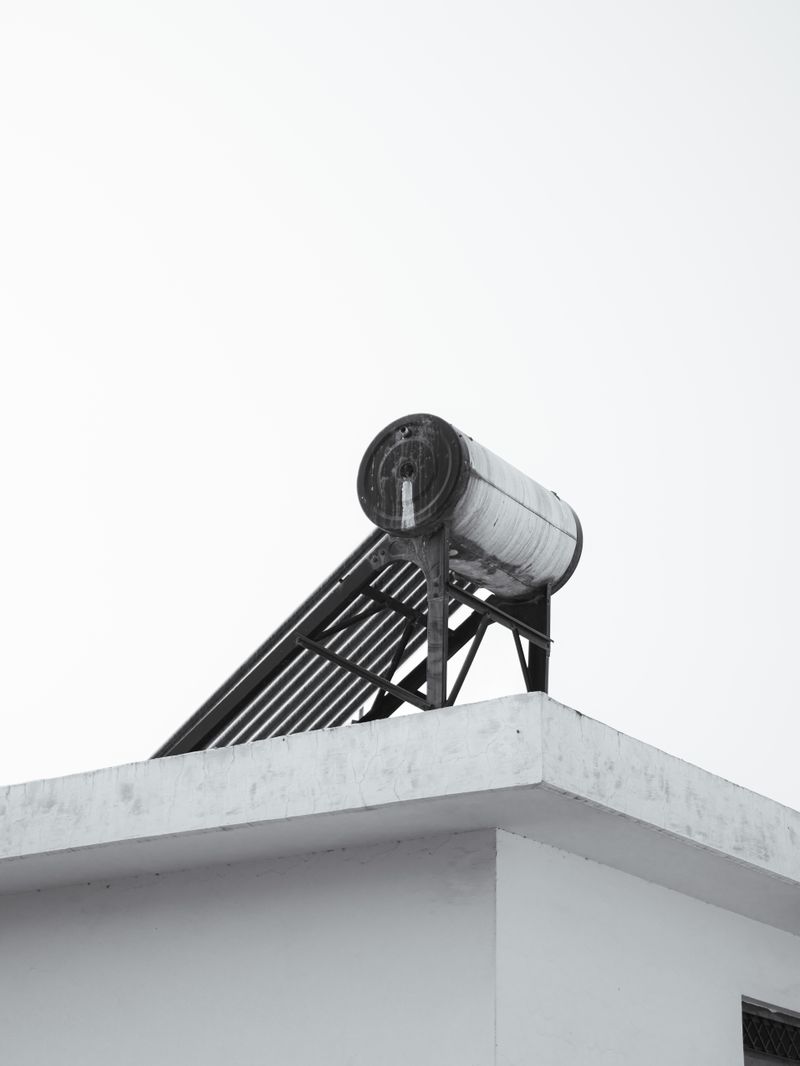
Replacing a water heater is one of the more consequential plumbing decisions a homeowner makes. Unlike a faucet or showerhead, a water heater is a 10–20 year commitment that affects your energy bills, comfort, and plumbing infrastructure every single day.
The central question most homeowners face is whether to replace like-for-like with a conventional storage tank heater or upgrade to a tankless (on-demand) system. Both technologies work, and both have legitimate use cases. The right answer depends on your household’s hot water usage patterns, your home’s infrastructure, your upfront budget, and how long you plan to stay in the home.
This guide puts both technologies side by side across every dimension that matters.
How Each Technology Works
Storage Tank Water Heaters
A storage tank heater maintains a reservoir of hot water — typically 40 to 80 gallons — at a set temperature (usually 120°F). A thermostat cycles the burner (gas) or heating elements (electric) on and off to maintain that temperature continuously, even when no hot water is being used. This is called standby heat loss — energy consumed just to keep water hot while it waits.
When you open a hot water tap, hot water flows from the top of the tank while cold water enters from the bottom through the dip tube. If demand exceeds tank capacity, you eventually get a “cold shower” as the hot water runs out and only cold water remains. Recovery time — how long it takes to reheat a depleted tank — typically ranges from 30 to 60 minutes.
Tankless (On-Demand) Water Heaters
Tankless heaters contain no storage tank. When a hot water tap is opened, a flow sensor activates a powerful burner or electric heating element that heats water as it passes through a heat exchanger. The unit fires only when hot water is needed, eliminating standby heat loss entirely.
Properly sized tankless units provide continuous hot water — there is no tank to deplete. However, they have a maximum flow rate measured in gallons per minute (GPM) — if demand exceeds that rate, the output temperature drops or flow is prioritized to certain fixtures.
Tankless heaters come in two configurations:
- Whole-house units: Sized to handle the full home’s hot water demand. Gas models are typically more powerful (7–11 GPM); electric whole-house units require very high amperage.
- Point-of-use units: Compact electric units installed under a sink or near a fixture to eliminate wait time for hot water. Not a replacement for a whole-house heater.
Upfront Cost Comparison
Storage Tank Heaters
| Type | Unit Cost | Installation Cost | Total Installed |
|---|---|---|---|
| 40-gal gas (standard) | $400–$700 | $150–$400 | $550–$1,100 |
| 50-gal gas (standard) | $500–$800 | $150–$400 | $650–$1,200 |
| 40-gal electric | $300–$600 | $100–$250 | $400–$850 |
| 50-gal electric | $400–$700 | $100–$250 | $500–$950 |
A straightforward like-for-like replacement of a storage tank heater is the least expensive option upfront, especially if the existing gas or electric connections are already in place.
Tankless Water Heaters
| Type | Unit Cost | Installation Cost | Total Installed |
|---|---|---|---|
| Gas whole-house (e.g., Rinnai RU160iN) | $700–$1,300 | $600–$1,500 | $1,300–$2,800 |
| Gas whole-house (e.g., EcoSmart ECO 27) | $500–$900 | $400–$900 | $900–$1,800 |
| Electric whole-house | $400–$900 | $300–$800 | $700–$1,700 |
Tankless installation costs are higher because they typically require:
- New dedicated gas line or upgraded electrical service (larger wire gauge, new circuit breaker)
- New venting (for gas units — stainless steel Category III flue)
- Possible electrical panel upgrade for whole-house electric models
- Condensate drain line (for condensing gas models)
In homes where the existing infrastructure needs significant modification, tankless installation costs can approach or exceed $3,000 total.
Energy Efficiency
This is where tankless heaters have a clear, quantifiable advantage.
Tank Heater Efficiency
Standard storage tank heaters carry an Energy Factor (EF) or Uniform Energy Factor (UEF) of 0.58–0.70 for gas models and 0.90–0.95 for electric models. The lower the standby losses, the higher the UEF. High-efficiency gas tank heaters with foam insulation can reach UEF 0.70.
Tankless Efficiency
Gas tankless units typically achieve UEF 0.82–0.96. Condensing models (which recover heat from exhaust gases) reach the higher end of that range. Electric tankless units achieve UEF 0.96–0.99, essentially converting electricity to heat at near-100% efficiency.
DOE Energy Savings Estimates
The U.S. Department of Energy estimates that for homes using 41 gallons or less of hot water per day, tankless heaters are 24–34% more energy efficient than conventional storage tanks. For homes using around 86 gallons per day, the efficiency advantage drops to 8–14%.
Annual Energy Cost Example
Assumptions: natural gas at $1.20/therm, 50 gallons/day average household
| System | Annual Gas Cost (Estimate) |
|---|---|
| Gas tank heater (UEF 0.62) | $450–$550 |
| Gas tankless condensing (UEF 0.94) | $280–$350 |
| Annual savings with tankless | $150–$200 |
Electric comparison (at $0.13/kWh, 50 gal/day):
| System | Annual Electric Cost (Estimate) |
|---|---|
| Electric tank (UEF 0.92) | $480–$560 |
| Electric tankless (UEF 0.98) | $450–$520 |
| Annual savings with tankless (electric) | $30–$60 |
The gas tankless advantage is significantly more pronounced than the electric tankless advantage, because gas tank heaters have greater standby losses relative to their electric counterparts.
Lifespan and Long-Term Reliability
Storage Tank Heaters
A well-maintained conventional gas or electric tank heater lasts 10–12 years. Proper maintenance — annual anode rod inspection and replacement, tank flush to remove sediment — extends lifespan to 12–15 years in some cases.
Failure modes:
- Anode rod depletion leading to tank corrosion
- Sediment accumulation reducing efficiency and increasing element failure risk
- Tank liner failure resulting in leaks
Once a tank starts leaking, replacement is typically the only option.
Tankless Water Heaters
Tankless units are rated for 20+ years of service life, roughly double the tank heater. The heat exchanger — the most expensive component — can typically be replaced independently without replacing the whole unit. Rinnai, for example, sells replacement heat exchangers for most of their product line.
Tankless units require annual descaling (flushing with white vinegar or a descaling solution) in hard water areas. Without descaling, mineral scale builds up in the heat exchanger, reducing efficiency and eventually causing failure.
Hot Water Output and Performance
Peak Demand and Flow Rate
A 50-gallon tank heater can deliver 50+ gallons before running cold, with a first-hour rating (FHR) of approximately 70–85 gallons for gas models. This covers simultaneous demand from a shower, dishwasher, and faucet with ease.
A tankless heater delivers water at its rated GPM continuously — but only up to that rate. Popular gas whole-house models:
- Rinnai RU130iN: 7.5 GPM at a 35°F temperature rise — adequate for 2–3 simultaneous applications in most climates.
- Rinnai RU160iN: 9.8 GPM — handles 3–4 simultaneous applications comfortably.
- Navien NPE-240A2: 11.2 GPM — suitable for large homes with high simultaneous demand.
- EcoSmart ECO 27: 3.0–6.0 GPM depending on incoming water temperature — best for smaller households in warmer climates.
Cold water climate consideration: Incoming water temperature matters enormously. A tankless heater rated for 7 GPM at a 35°F rise (say, 50°F incoming → 85°F output) can only deliver 5 GPM at a 55°F rise (45°F incoming → 100°F output). In northern states where groundwater temperature in winter is 40–45°F, tankless output capacity drops noticeably.
Standby Time and “Cold Water Sandwich”
One complaint specific to tankless heaters is the cold water sandwich — a burst of cold water that arrives at the tap in between two back-to-back uses. When the first user finishes and closes the tap, the heater shuts off. When the next user opens the tap, the unit fires, but the cold water in the pipes between the heater and the fixture arrives first. Units with recirculation pumps (like the Rinnai RU series) or dedicated recirculation systems minimize this effect.
Storage tanks do not have this issue — as long as the tank is not depleted, hot water arrives at the tap in the time it takes to clear the cold water already in the supply pipe.
Recommended Products
Gas Tankless Heaters
Rinnai RU160iN Ultra Series Natural Gas Tankless Water Heater 9.8 GPM, condensing (UEF 0.96), built-in recirculation, suitable for 3–4 bathroom homes. Verify current prices with manufacturers, dealers, or retailers before buying.
Rinnai V65iN Value Series Natural Gas Tankless 6.6 GPM, non-condensing (UEF 0.82), lower upfront cost, suitable for 1–2 bathroom homes or temperate climates. Verify current prices with manufacturers, dealers, or retailers before buying.
Navien NPE-240A2 Condensing Natural Gas Tankless 11.2 GPM, UEF 0.97, with built-in recirculation and buffer tank to reduce cold water sandwich effect. Excellent for large households. Verify current prices with manufacturers, dealers, or retailers before buying.
Electric Tankless Heaters
EcoSmart ECO 27 Electric Tankless Water Heater 27 kW, self-modulating, suitable for warmer climates or smaller households. Requires a 3 × 40A breaker. Verify current prices with manufacturers, dealers, or retailers before buying.
EcoSmart ECO 36 Electric Tankless Water Heater 36 kW, higher output for larger homes or colder climates. Requires 150A service minimum. Verify current prices with manufacturers, dealers, or retailers before buying.
Total Cost of Ownership: 15-Year Analysis
Assuming a 2-adult, 2-child household using approximately 60 gallons/day of hot water, natural gas at $1.20/therm, and accounting for replacement costs:
| Factor | 40-gal Gas Tank | Gas Tankless (Condensing) |
|---|---|---|
| Unit + installation | $800 | $2,500 |
| Annual energy cost | $500 | $320 |
| 15-year energy cost | $7,500 | $4,800 |
| Replacement at year 12 | $800 | $0 (expected 20+ yr life) |
| Maintenance (15 yr) | $150 | $300 |
| 15-year total | $9,250 | $7,600 |
| Savings with tankless | $1,650 |
The break-even point in this scenario is approximately 8–10 years. If you plan to stay in the home for 10+ years, tankless typically wins on total cost. For shorter timelines or if the installation costs are particularly high due to infrastructure upgrades, the economics favor a standard tank replacement.
Decision Framework
Choose a storage tank heater if:
- Budget for upfront costs is tight
- You are in a temporary living situation or expect to sell the home within 5 years
- Your home’s infrastructure (electrical panel, gas line) cannot support a tankless unit without expensive upgrades
- You have very high simultaneous hot water demand that a single tankless unit cannot meet
- You prefer simplicity and easier DIY serviceability
Choose a tankless heater if:
- You plan to stay in the home for 10+ years
- Energy efficiency and lower long-term operating costs are priorities
- Space is at a premium (tankless units are compact, typically 20”×14”×6”)
- You want continuous hot water without the risk of running out
- You are already planning a gas line or electrical upgrade for other reasons
The answer is rarely absolute — the best water heater is the one properly sized and installed for your specific home, climate, and usage patterns. Always get multiple installation quotes before committing, since labor costs vary significantly by region.

Flow Control HQ Editorial Team
Independent trade-focused editorial team