How to Winterize Outdoor Faucets and Spigots
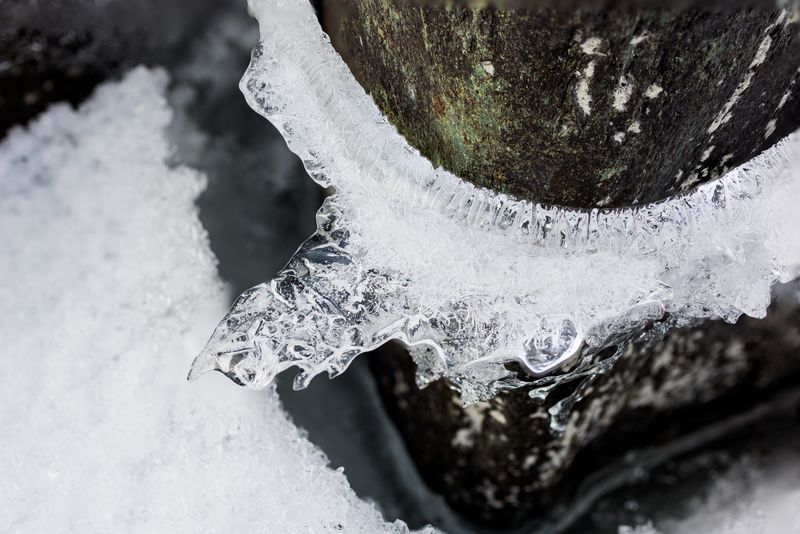
A frozen outdoor faucet is one of the most preventable and yet most common causes of winter water damage. When water trapped in an outdoor spigot or the pipe behind it freezes, it expands with tremendous force — enough to crack the faucet body, split the supply pipe, or push apart a pipe joint. The result is often a water leak that goes undetected until spring, when the pipe thaws and thousands of gallons can pour into a basement or wall cavity before anyone notices.
The repair cost for a burst pipe and the resulting water damage can easily reach $2,000 to $10,000 or more. Winterizing your outdoor faucets takes less than 30 minutes and costs almost nothing. This guide covers everything you need to do before the first hard freeze arrives.
Understanding Your Outdoor Faucet Type
The winterization process differs slightly depending on what type of outdoor faucet (spigot or hose bib) you have.
Standard Faucet (Non-Frost-Free)
A standard outdoor faucet is simply a valve mounted to the exterior wall of your home. The supply pipe runs from the faucet through the wall to a shutoff valve somewhere inside the home. When you turn off a standard faucet, water remains in the pipe between the shutoff valve and the faucet itself — including the section that passes through the cold exterior wall and the faucet body.
This trapped water is what freezes and causes damage. Standard faucets must be winterized by shutting off the interior valve and draining the exposed pipe section.
Frost-Free Faucet (Anti-Siphon Faucet)
A frost-free faucet (also called an anti-siphon faucet or freezeless sillcock) is designed to prevent this problem. When you turn the handle, a long stem operates a valve located 6 to 12 inches back inside the wall, in the warm space of the home. When you close the faucet, the water drains out of the exterior portion automatically, leaving nothing to freeze.
Frost-free faucets have been standard in most new construction since the 1990s. You can identify one by the angled faucet body that tilts slightly downward toward the outside (allowing drainage) and the longer-than-normal depth of the faucet assembly.
Important caveat: A frost-free faucet only works as designed if you disconnect your garden hose before winter. A connected hose traps water in the faucet and prevents drainage, defeating the frost-free mechanism. This is the most common reason frost-free faucets freeze and fail.
How to Identify Your Faucet Type
If the faucet body is straight and relatively shallow (1 to 2 inches of depth at the wall), it is likely a standard faucet. If the faucet body extends 4 to 12 inches into or through the wall at a slight downward angle, it is likely frost-free.
When in doubt, winterize it as a standard faucet.
Step 1: Disconnect All Garden Hoses
This step applies to both standard and frost-free faucets. Before any freeze, disconnect every garden hose from every outdoor faucet.
A connected hose holds water at the faucet outlet, preventing any drainage and holding freezing water against the faucet body. Even frost-free faucets will freeze if a hose is attached.
Drain the hoses completely by holding one end up and letting water run out the other, then coil and store them in a garage, shed, or basement. Leaving rubber hoses outdoors in freezing temperatures shortens their life significantly.
Also disconnect and drain:
- Soaker hoses
- Drip irrigation systems connected to the faucet
- Spray nozzles and watering wands left on the hose
Step 2: Locate and Close the Interior Shutoff Valve
For standard faucets — and as an added precaution for any outdoor faucet — find the interior shutoff valve that controls water supply to that faucet and close it.
Where to Find the Interior Shutoff
The shutoff valve for an outdoor faucet is usually located:
- In the basement, on the supply pipe that exits through the foundation wall or rim joist toward the faucet
- In a crawl space, along the underside of the floor near the exterior wall where the faucet is located
- In a utility room or mechanical room
- In a first-floor closet or pantry on the wall that backs up to the exterior faucet
Trace the location of each outdoor faucet from inside and look for a valve on the cold water supply line in approximately that area. Shutoff valves are typically a ball valve (lever handle that turns 90 degrees) or a gate valve (round wheel handle that you turn multiple times to close).
Close the valve fully. For a ball valve, the lever should be perpendicular (crosswise) to the pipe. For a gate valve, turn clockwise until it stops.
What If There Is No Interior Shutoff?
Some older homes have outdoor faucets without dedicated interior shutoffs. In this case, your options are:
-
Install a shutoff valve. A plumber can add one in an hour or two at a cost of $100 to $250. This is a permanent fix that simplifies winterization every year.
-
Rely on foam faucet covers (described below) as your primary protection — understanding that they offer partial but not complete protection.
-
Replace the faucet with a frost-free model. This is a common plumbing upgrade that a plumber can perform for $100 to $200 in labor plus parts.
Step 3: Drain the Pipe Between the Shutoff and the Faucet
With the interior shutoff valve closed, go back outside and open the outdoor faucet fully. This releases any water remaining in the pipe between the shutoff and the faucet, allowing it to drain out through the spigot.
Let the faucet run until the water stops flowing completely — this may take 30 to 60 seconds. Once drained, close the outdoor faucet.
If the interior shutoff valve has a small bleeder cap (a small brass cap on the side of the valve body), open it slightly to allow any remaining water to drain from the interior side of the shutoff. Place a small cup or rag below it. Once the trickle stops, close the bleeder cap.
Step 4: Install an Outdoor Faucet Cover
Even after draining, insulating the faucet itself provides an extra layer of protection against extreme cold, particularly for standard faucets where the faucet body remains exposed. Faucet covers are inexpensive, easy to install, and work well as secondary freeze protection.
Foam Faucet Covers
The most common type is a dome-shaped foam cover with a soft gasket that presses against the exterior wall. It fits over the faucet, trapping a pocket of air that acts as insulation. For areas where temperatures stay above single digits, a quality foam cover combined with a closed shutoff valve provides very solid protection.
The Frost King FC1 Outdoor Faucet Cover (available on Amazon) is a widely used, well-reviewed option that fits most standard outdoor faucets. It installs in seconds with a drawstring closure.
For exposed pipes leading to the faucet on the exterior wall, pipe insulation foam sleeves (available on Amazon) are inexpensive and can be cut to length and slid over the pipe. These are made from polyethylene foam and provide R-values of approximately 2 to 3, which is meaningful protection down to around 15 to 20 degrees Fahrenheit.
Hard-Shell Covers
For more severe climates or unheated areas (like a water faucet on an outbuilding), a rigid plastic insulating cover with a foam insert provides better protection than a foam dome alone. These create a more sealed insulating chamber around the faucet.
Heat Tape (Electric Pipe Heating Cable)
In extremely cold climates — sustained temperatures below 0 degrees Fahrenheit, or for pipes in unheated spaces like garages and crawl spaces — passive insulation may not be sufficient. Electric heat tape (also called pipe heating cable) wraps around the pipe and provides a small amount of electrical heat to keep the pipe above freezing.
The Frost King Electric Pipe Heating Cable (available on Amazon) is a self-regulating 6-foot cable that plugs into a standard outlet. Self-regulating cables are the preferred type — they automatically increase heat output when temperatures drop and reduce it when temperatures rise, consuming power only as needed and eliminating the fire risk associated with older constant-wattage tapes.
For longer runs (exposed pipes in a crawl space or along an exterior wall), use a longer cable such as the Easy Heat AHB Heating Cable (available in 24-foot, 30-foot, and longer runs on Amazon). These must be plugged in before temperatures drop and should be on a GFCI-protected outlet.
Apply heat tape before wrapping with foam insulation — the tape goes directly on the pipe, and the insulation wraps over the top to retain the heat.
Special Situations
Faucets on Detached Garages and Outbuildings
Water supply lines and faucets in detached garages, sheds, and workshops are at high risk because these spaces typically receive no interior heat during winter. Options:
- Shut off water to the building entirely at the main supply line and drain all pipes for winter
- Install frost-free faucets rated for extra-long stems (12 inches or longer) if the wall they pass through is thicker or uninsulated
- Use self-regulating heat tape on the entire supply line, not just the faucet itself
In-Ground Irrigation Systems
If you have an in-ground sprinkler system, it requires a separate winterization process (blow-out) using compressed air. This is generally considered outside the scope of standard faucet winterization and is covered separately.
Hose Bibs in Crawl Spaces
Supply pipes passing through crawl spaces are at significant freeze risk since crawl spaces are often cold and poorly insulated. If your supply pipe is exposed in an uninsulated crawl space, insulate the full run of pipe with foam sleeves and consider adding heat tape in extreme climates.
When to Winterize
The timing for outdoor faucet winterization depends on your climate, but a reliable rule of thumb is to complete winterization before the first night that temperatures are forecast to drop below 28 degrees Fahrenheit.
A single brief freeze may not damage a standard faucet if the pipe drains quickly. But sustained freezing temperatures, particularly when the faucet is on a north-facing wall or in a shaded location, can freeze water in the pipe surprisingly fast.
Most of the northern United States and Canada should complete winterization by mid-October to early November. Southern regions with milder winters should still take precautions by early December.
Spring Startup
When temperatures are reliably above freezing:
- Remove and store the faucet covers
- Slowly open the interior shutoff valve — do not slam it open
- Check the faucet for any dripping or leaks that might indicate freeze damage
- Reconnect hoses and test the faucet
If you find a leak after reopening the supply in spring, shut the water back off immediately. A leaking outdoor faucet after winter almost certainly means a crack from freezing. Replacement of the faucet or the damaged pipe section will be required.
Replacing a Standard Faucet with a Frost-Free Model
If your home has standard outdoor faucets and you’re tired of the annual winterization routine, replacing them with frost-free faucets is a straightforward plumbing project.
The Woodford Model 22 (available on Amazon) is a professional-grade frost-free sillcock available in stem lengths from 6 inches to 18 inches. Match the stem length to your wall thickness — the valve must be inside the heated envelope of the home for the frost-free design to work.
Frost-free faucets are installed by:
- Shutting off the supply and draining the pipe
- Cutting the old supply pipe and removing the old faucet
- Connecting the new frost-free faucet to the supply line (typically with a soldering, compression, or push-to-connect fitting)
- Securing the faucet to the exterior wall with screws through the mounting flange
This is a project most experienced DIYers can complete in 1 to 2 hours. The peace of mind from never worrying about frozen outdoor faucets again is well worth the effort.
Summary Checklist
Before the first freeze of winter, complete these steps for every outdoor faucet:
- Disconnect and drain all garden hoses
- Close the interior shutoff valve for each faucet
- Open the outdoor faucet and drain residual water from the pipe
- Close the bleeder cap on the shutoff valve (if present)
- Close the outdoor faucet
- Install an insulating faucet cover
- Add pipe insulation or heat tape for any exposed pipe sections in cold areas
- Verify frost-free faucets have no connected hoses
Completing this list takes less than an hour and eliminates a significant risk of water damage to your home. It is one of the simplest and highest-return maintenance tasks a homeowner can perform.

Flow Control HQ Editorial Team
Independent trade-focused editorial team