Heat Pump Water Heater Plumbing Guide
Quick answer
A heat pump water heater replacement is not only an efficiency upgrade; it is a plumbing scope decision. Before choosing a model, verify tank footprint, shutoff condition, drain pan, T&P discharge, condensate route, service access, permit requirements, and whether the existing 240V circuit is suitable.
Common questions
- How is this Flow Control HQ guide different from an HVAC efficiency guide?
- This page focuses on replacement logistics: water shutoffs, pipe connections, drain pan and T&P discharge, condensate routing, access, permitting, and the plumber/electrician handoff. Energy modeling and whole-home HVAC strategy are secondary here.
- Can a heat pump water heater reuse the existing tank location?
- Sometimes. The old location must have enough room volume, height, service clearance, condensate drainage, a suitable drain pan or floor drain strategy, and electrical capacity that matches the new unit.
- What should be written into an installer quote?
- Ask the quote to list tank size, model number, removal, pan and drain work, T&P discharge, condensate pump or drain route, shutoff replacement, permit/inspection handling, electrical scope, and warranty terms.
Source note: Reviewed July 2026 against ENERGY STAR heat-pump-water-heater tax-credit guidance, DOE home-upgrade guidance, and common water-heater installation constraints. Local plumbing code, manufacturer instructions, electrical capacity, and inspection rules control the final scope.
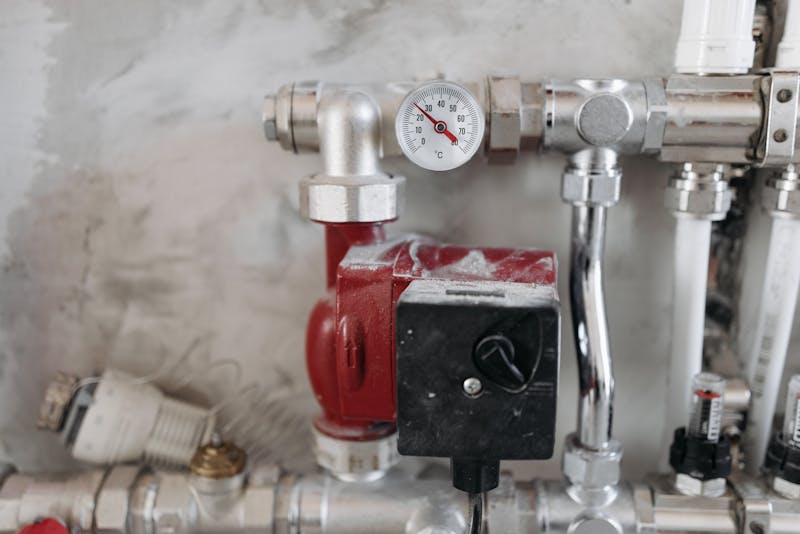
If there is one upgrade that consistently delivers among the best returns on investment of any home improvement, it is replacing a conventional electric resistance water heater with a heat pump water heater (HPWH). The energy savings are substantial, the technology is mature, and federal tax credits make the economics even more compelling.
Yet heat pump water heaters remain unfamiliar to many homeowners. This guide explains how they work, who they are right for, what models to consider, and whether the investment makes financial sense for your situation.
Flow Control HQ Angle: Replacement Plumbing Scope
This Flow Control HQ guide treats the heat pump water heater as a water-heater replacement project. The energy savings matter, but the job succeeds or fails on the site conditions around the tank: water shutoffs, pipe transitions, pan and drain protection, condensate routing, temperature-and-pressure relief discharge, service clearance, and the plumber/electrician handoff.
Use an HVAC or electrification guide for the broader equipment-efficiency decision. Use this page to decide what must appear in the written plumbing scope before anyone drains the old tank.
| Scope item | What to confirm before purchase |
|---|---|
| Existing shutoff | The cold-side shutoff works, is accessible, and can be replaced if seized |
| Drain protection | A pan, floor drain, pump, or approved discharge route protects finished areas |
| T&P discharge | The relief valve discharge path matches manufacturer and local code requirements |
| Condensate | The heat pump’s condensate has a reliable gravity drain or condensate pump route |
| Service access | Filters, controls, anode/service parts, and future replacement paths remain reachable |
| Electrical handoff | Circuit rating and panel capacity are verified before the plumber assumes reuse |
Source check: review current ENERGY STAR heat pump water heater tax credit guidance and DOE home-upgrade guidance, then confirm local plumbing and electrical requirements with the authority having jurisdiction.
How Heat Pump Water Heaters Work
A conventional electric water heater converts electrical energy directly into heat using resistance elements — the same basic technology as a toaster. For every unit of electricity consumed, you get one unit of heat. The efficiency ceiling is 100%.
A heat pump water heater does not generate heat — it moves heat. Like a refrigerator or air conditioner running in reverse, a heat pump extracts heat energy from the surrounding air and transfers it into the water in the storage tank. Because moving heat is far more energy-efficient than generating it, you can get 2–3 units of heat energy for every 1 unit of electrical energy consumed.
This ratio is called the Coefficient of Performance (COP) or, in annual terms, the Uniform Energy Factor (UEF). Most modern HPWHs achieve a UEF of 3.5–4.0, meaning they are 350–400% efficient compared to a conventional electric heater’s 90–95%.
The Heat Exchange Process
The HPWH heat pump cycle works as follows:
- A fan draws ambient air across an evaporator coil filled with refrigerant.
- The refrigerant absorbs heat from the air and evaporates into a gas.
- A compressor increases the gas’s pressure, further raising its temperature.
- The hot compressed gas flows through a condenser coil wrapped around or submerged in the water tank, transferring heat into the water.
- The refrigerant condenses back into a liquid, passes through an expansion valve, and the cycle repeats.
The air exhausted by the heat pump is cooler and drier than it was before — a side effect that provides a small dehumidification benefit in humid climates but adds slightly to heating loads in cold climates.
Operating Modes
Most modern HPWHs offer multiple operating modes:
- Heat pump only (most efficient): Uses only the heat pump. Slower to recover but most energy-efficient. Best for off-peak hours.
- Hybrid / auto: The unit automatically uses the heat pump when possible and switches on the resistance elements when demand exceeds heat pump capacity.
- Electric/resistance only: Operates like a conventional electric heater. Used in emergencies or when noise is a concern.
- High demand: Uses both heat pump and resistance elements simultaneously for maximum recovery speed.
- Vacation / away mode: Maintains a lower temperature to save energy when the home is unoccupied.
Energy Savings: The Real Numbers
Comparison to Conventional Electric Water Heater
The DOE estimates that a heat pump water heater uses 60–70% less electricity than a conventional electric resistance heater for the same hot water output.
Annual energy cost comparison (electricity at $0.13/kWh, family of four using ~65 gallons/day):
| Type | Annual kWh | Annual Cost |
|---|---|---|
| Standard electric resistance (UEF 0.92) | ~4,800 kWh | ~$625 |
| Heat pump water heater (UEF 3.75) | ~1,200 kWh | ~$156 |
| Annual savings | ~$469 |
At higher electricity rates (California averages $0.25/kWh, Hawaii $0.39/kWh), annual savings can reach $700–$1,200.
Gas vs. Heat Pump
Heat pump water heaters are primarily compared to electric resistance heaters, but how do they stack up against gas?
At national average rates ($1.20/therm gas, $0.13/kWh electricity):
- Gas tank heater (UEF 0.62): ~$480/year
- HPWH (UEF 3.75): ~$156/year
The HPWH wins on operating cost even against gas in most of the country. This comparison shifts in regions with very low natural gas prices or very high electricity rates — run the numbers for your specific utility costs.
Federal Tax Credits and Rebates
The Inflation Reduction Act (IRA) established the Energy Efficient Home Improvement Credit (25C), which covers:
- 30% of the purchase and installation cost of a qualifying heat pump water heater
- Up to $600 maximum credit per year for HPWHs specifically
- The credit is non-refundable (reduces your tax liability; does not generate a refund)
- Qualifies for units with UEF ≥ 2.2; most modern HPWHs far exceed this
In addition to the federal credit, many state and utility rebate programs offer $300–$800 in instant rebates or bill credits. Check the DSIRE database (dsireusa.org) and your utility’s website for local incentives. In some states, combined federal credit + utility rebate can reduce net HPWH cost by $600–$1,400.
Payback Period and ROI
Typical Scenario
- HPWH installed cost: $1,200–$1,800 (unit + installation)
- Federal tax credit: $600 (on $2,000 total spend at 30%)
- Net cost after credit: $600–$1,200
- Annual savings vs. electric resistance: $400–$500
- Simple payback period: 1.5–3 years
For homeowners replacing an aging electric resistance heater, this is one of the fastest payback periods of any home efficiency upgrade.
Replacing Gas? Longer Payback, But Still Viable
If replacing a functioning gas water heater, the economics are less compelling in low-gas-cost regions but still work in states with higher gas prices or strong utility rebates. In California, New York, and the Pacific Northwest, the payback period replacing a gas heater is typically 4–7 years, which is still within the unit’s 10–15 year service life.
Installation Requirements
Heat pump water heaters are not a universal drop-in replacement. They have specific space and environmental requirements that must be met.
Space Requirements
The heat pump component requires adequate surrounding air volume to draw heat from. Manufacturers typically specify:
- Minimum 1,000 cubic feet of unconditioned or semi-conditioned air space (roughly 10 × 10 × 10 feet, or a 100 square foot room with 8-foot ceilings)
- The unit exhausts cool, dry air — in a basement or garage, this is typically fine. In a closet or very small utility room, the unit may not have enough ambient heat to perform efficiently.
Most HPWHs are taller than standard electric tank heaters — typically 60–70 inches versus 50–54 inches for a 50-gallon standard tank. Measure ceiling height in the installation space before ordering.
Temperature Range
HPWHs operate most efficiently in ambient temperatures between 40°F and 120°F. Below 40°F, the heat pump becomes less efficient and the unit relies more heavily on resistance backup elements. In very cold garages or unconditioned basements in northern states, efficiency drops during winter months.
For installations in cold spaces:
- The unit still works but may not achieve rated UEF in winter
- Consider a unit with good low-temperature performance (some models work efficiently down to 32°F or even lower)
- The backup resistance elements ensure you never run out of hot water regardless
Electrical Requirements
HPWHs are 240V appliances, typically drawing 15–30 amps. Most require a 30A, 240V dedicated circuit with 10 AWG wire. If you are replacing an existing 240V electric water heater, the existing circuit may already be adequate — verify amperage matches the new unit’s requirements.
Condensate Drainage
The heat pump dehumidifies the air as it extracts heat, producing condensate water — typically 1–3 pints per day in humid conditions. The unit needs a drain nearby: a floor drain, utility sink, or condensate pump to a drain. Many units include a condensate port; some have a small condensate reservoir that can be emptied manually, though this is inconvenient for long-term use.
Noise Level
HPWHs produce noise from the compressor and fan — typically 50–60 decibels at 6 feet, roughly equivalent to a dishwasher or moderate rain. This is not disruptive in a basement or garage but may be noticeable in a utility closet adjacent to living space. Check dBA ratings before purchasing if noise is a concern.
Top Heat Pump Water Heater Models
Rheem ProTerra 50-Gallon HPWH (Model: PROPH50 T2 RH350)
Rheem’s ProTerra is consistently among the top-rated HPWHs on the market. Key specifications:
- Capacity: 50 gallons
- UEF: 4.0 (one of the highest in the category)
- First hour rating: 89 gallons
- EcoNet Wi-Fi connectivity: Yes — control mode, temperature, and scheduling from a smartphone app
- LeakSense technology: Automatically shuts off if a leak is detected
- Noise level: 49 dBA
- Dimensions: 21.3” diameter × 61” tall
Rheem ProTerra 50-Gallon Hybrid Electric Water Heater
The ProTerra’s 4.0 UEF is notably higher than many competitors, delivering the best-in-class energy savings. The leak detection auto-shutoff is a valuable feature that reduces the catastrophic failure risk associated with any tank water heater.
Rheem ProTerra 80-Gallon HPWH
For larger households (5+ occupants) or high hot water demand:
- Capacity: 80 gallons
- UEF: 3.75
- First hour rating: 126 gallons
- Dimensions: 26.5” diameter × 64.5” tall
Rheem ProTerra 80-Gallon Hybrid Electric Water Heater
AO Smith HPTU-50N Voltex 50-Gallon HPWH
AO Smith’s Voltex is the other major brand dominating the HPWH market, with a strong reputation for reliability and service support.
- Capacity: 50 gallons
- UEF: 3.45
- First hour rating: 69 gallons
- Operating modes: 5 (Efficiency, Hybrid, Electric, High Demand, Vacation)
- Noise level: 49 dBA
- Dimensions: 21.5” diameter × 61.75” tall
AO Smith Voltex 50-Gallon Hybrid Electric Heat Pump Water Heater
The AO Smith has a slightly lower UEF than the Rheem ProTerra but is widely available and benefits from AO Smith’s extensive service network. It is an excellent choice for homeowners who prefer name-brand reliability and easy local service access.
AO Smith HPTU-80N Voltex 80-Gallon HPWH
- Capacity: 80 gallons
- UEF: 3.39
- First hour rating: 100 gallons
AO Smith Voltex 80-Gallon Hybrid Electric Heat Pump Water Heater
Sizing Guide
| Household Size | Recommended Capacity |
|---|---|
| 1–2 people | 40–50 gallons |
| 3–4 people | 50–65 gallons |
| 5–6 people | 65–80 gallons |
| 7+ people | 80 gallons + (or two units) |
The first-hour rating (FHR) is often more useful than tank capacity for sizing. The FHR tells you how many gallons the unit can deliver in the first hour starting with a full hot tank — accounting for both stored hot water and the recovery rate. A 50-gallon HPWH with an FHR of 89 gallons can support more simultaneous demand than its tank size implies.
Installation Process
Steps for Replacing an Existing Electric Water Heater
- Turn off the circuit breaker for the existing water heater.
- Turn off the cold water supply to the water heater.
- Connect a hose to the drain valve and drain the tank to a floor drain or outside.
- Disconnect the electrical connections — note which wires connect to which terminals (photograph before disconnecting).
- Disconnect the cold water inlet and hot water outlet supply lines.
- Remove and dispose of the old tank (most metal recyclers accept old water heaters).
- Position the new HPWH — check clearances on all sides and above. The unit should be level.
- Connect the water lines — cold inlet and hot outlet. Use dielectric unions if connecting copper to a steel tank. Install a T&P (temperature and pressure) relief valve if not pre-installed, with the discharge pipe running to within 6 inches of the floor or to a drain.
- Set up condensate drainage — connect the condensate drain line to a floor drain, utility sink, or condensate pump.
- Make the electrical connection — if the existing circuit is 30A/240V and the new unit requires the same, the connection is typically straightforward. Connect black, white, and green (or bare) ground wires per the wiring diagram.
- Turn on the cold water supply slowly and check for leaks. Open a hot water faucet to purge air until a steady flow is established.
- Restore power at the breaker.
- Set the operating mode to “Hybrid” for most households. Set temperature to 120°F.
- Allow 2–3 hours for the first full tank to heat.
Professional installation typically costs $200–$500 depending on your area and the complexity of the connection. If electrical work is needed (new circuit, panel capacity), add $150–$400 for an electrician.
Heat Pump Water Heater vs. Other Technologies
| Feature | HPWH | Gas Tankless | Electric Resistance Tank | Gas Tank |
|---|---|---|---|---|
| Annual energy cost (typical) | $150–$200 | $280–$350 | $580–$650 | $450–$550 |
| Upfront cost (installed) | $1,200–$1,800 | $1,500–$2,800 | $600–$900 | $700–$1,200 |
| Lifespan | 10–15 years | 20+ years | 10–12 years | 10–12 years |
| IRA tax credit eligible | Yes (30%, up to $600) | No | No | No |
| Works in power outage | No | Yes (with gas) | No | Yes (with gas) |
| Dehumidifies space | Yes | No | No | No |
| Adds to home cooling load | No (removes heat from space) | N/A | No | No |
Who Should Buy a Heat Pump Water Heater
Strong candidates:
- Homeowners with electric resistance water heaters — the savings vs. a conventional electric heater are enormous and the payback is fast
- Homeowners in humid climates who benefit from the dehumidification effect
- Homeowners planning to stay in the home for 5+ years
- Households in states with high electricity costs and strong rebate programs
- Anyone installing solar panels — HPWHs pair exceptionally well with solar, and the low consumption means solar can cover a larger proportion of water heating costs
Less ideal candidates:
- Homeowners in very cold climates with unconditioned installation spaces (garage in Minnesota, for example) — the unit still works, but winter efficiency drops and you may be adding slightly to heating costs
- Homes without a suitable installation space (adequate cubic footage, drain access, ceiling height)
- Homeowners in regions with very low natural gas prices and moderate electricity rates (the economics of switching from gas are less compelling, though still often positive)
Final Assessment
The heat pump water heater is the most energy-efficient electric water heater technology available to residential consumers. For homeowners currently running an electric resistance heater, replacing it with an HPWH is one of the most clearly cost-effective home upgrades possible — with payback periods under 3 years in most cases after federal tax credits.
The Rheem ProTerra and AO Smith Voltex represent the two dominant, well-supported options in the market. Both carry strong UEF ratings, multiple operating modes, and are ENERGY STAR certified. Either is an excellent choice; the Rheem ProTerra’s higher UEF (4.0 vs. 3.45) gives it a slight efficiency edge, while the AO Smith benefits from slightly broader service availability.
Check your utility’s rebate program before purchasing — in many states, the combination of the federal tax credit and utility incentives brings the net cost of an HPWH installation close to or below the cost of a straight electric tank replacement.
Plan the water-heater replacement scope
These resources keep the heat pump water heater decision tied to shutoffs, tank alternatives, permits, water quality, and written installer scope.
- Water heater replacement worksheet
Track tank size, fuel, clearances, drain paths, permits, and installer questions.
- Water heater maintenance and replacement
Separate normal service signs from full replacement timing.
- Tankless vs. tank water heaters
Compare heat-pump tanks with other replacement formats before quotes.
- Emergency water shutoff guide
Confirm valve locations before any tank removal or leak response.
- How to test water quality
Document water conditions that can affect maintenance, anodes, filters, and fixture choices.

Flow Control HQ Editorial Team
Independent trade-focused editorial team