Commercial Plumbing Code Guide: IPC vs UPC and Key Differences
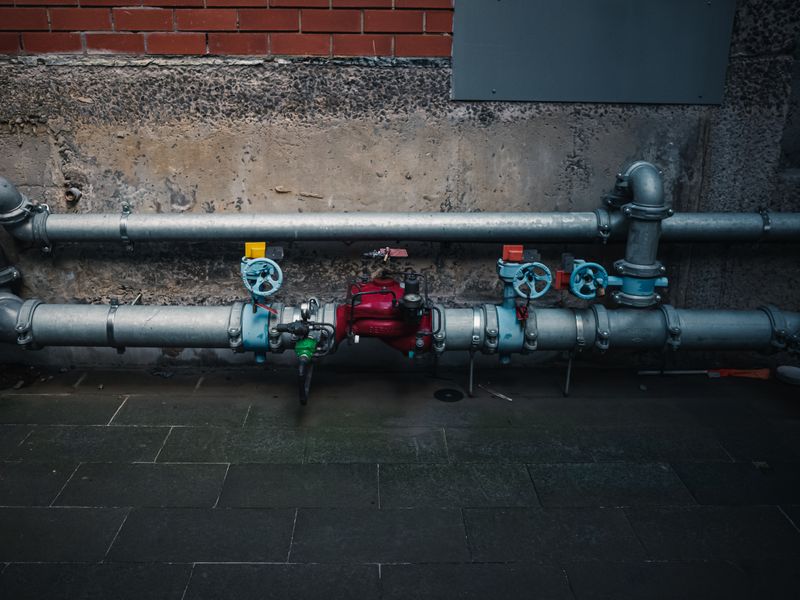
Commercial plumbing is governed by a more complex and demanding set of code requirements than residential work. The stakes are higher — a fixture shortfall in an office building restroom affects dozens or hundreds of people, a backflow failure can contaminate a municipal water supply, and a grease trap installed to the wrong specification can trigger costly enforcement actions from both the building department and the sanitary district.
Whether you’re a plumbing contractor preparing for commercial work, a building owner reviewing plans, or a facilities manager trying to understand compliance obligations, this guide covers the core elements of commercial plumbing code: the two dominant model codes, how they differ, commercial-specific requirements that don’t appear in residential work, and the key resources you need.
The Two Dominant Model Codes: IPC and UPC
The United States does not have a single national plumbing code. Instead, states and municipalities adopt one of two dominant model codes — or in some cases, a state-specific code based on one of these models.
International Plumbing Code (IPC)
The International Plumbing Code is published by the International Code Council (ICC) and is part of the broader family of International Codes (I-Codes) that includes the International Building Code (IBC) and International Mechanical Code (IMC). The IPC is adopted in most of the eastern United States, the Midwest, and many southeastern states.
States that use IPC or IPC-based codes include: Alabama, Colorado, Florida, Georgia, Indiana, Maryland, Michigan, Minnesota, Missouri, New Jersey, New York, North Carolina, Ohio, Pennsylvania, South Carolina, Tennessee, Virginia, and others.
The IPC is organized by system type: general regulations, definitions, general regulations, fixtures, water heaters, water supply and distribution, sanitary drainage, indirect and special waste, vents, traps, storm drainage, special piping and storage systems, and referenced standards.
Uniform Plumbing Code (UPC)
The Uniform Plumbing Code is published by the International Association of Plumbing and Mechanical Officials (IAPMO) and is dominant in the western United States.
States that use UPC or UPC-based codes include: Alaska, Arizona, California, Hawaii, Idaho, Montana, Nevada, Oregon, Utah, Washington, and others.
The UPC has a different organizational structure than the IPC and in some cases uses different terminology for the same concepts. It tends to be slightly more restrictive in certain areas, particularly around trap seals and vent requirements.
Key Differences Between IPC and UPC
| Topic | IPC | UPC |
|---|---|---|
| Trap arm length (2-inch trap) | 5 feet max | 4 feet max |
| Air admittance valves (AAVs) | Permitted with conditions | Restricted; many jurisdictions prohibit |
| Wet venting | Permitted under specific conditions | More restricted |
| Combination waste and vent | Permitted for specific applications | Permitted but with tighter parameters |
| Fixture unit values (some fixtures) | Slightly different values | Slightly different values |
| Organization | Organized by system type | Organized by chapter/subject |
For contractors who work in multiple jurisdictions, these differences are consequential. A DWV design that passes inspection in a UPC state may need revision in an IPC state and vice versa. Always verify which code edition your jurisdiction has adopted — most states are one to two editions behind the current published edition.
Code books for both: International Plumbing Code book | Uniform Plumbing Code book
Commercial vs. Residential: Key Code Differences
Fixture Count Requirements
Residential plumbing codes largely defer to the homeowner’s design preferences for fixture counts (beyond minimum one bathroom per dwelling unit). Commercial codes specify minimum fixture counts based on occupancy type and occupant load.
IPC Table 403.1 and UPC Table 422.1 provide fixture count minimums. The calculation follows this general process:
- Determine the occupancy classification (office, restaurant, assembly, retail, etc.)
- Calculate the occupant load from the building’s square footage and occupancy load factor
- Apply the fixture count table to determine minimum toilets, lavatories, drinking fountains, and other required fixtures
Example: Office Building For a 10,000 square foot office building under IPC:
- Occupant load: 10,000 sq ft ÷ 100 (office load factor) = 100 occupants (50 male, 50 female assumed)
- Toilets required: 1 per 25 females = 2 female toilets; 1 per 50 males = 1 male toilet; 1 urinal permitted to substitute for 1 male toilet
- Lavatories: 1 per 40 occupants = 3 lavatories total
- Drinking fountains: 1 per 100 occupants = 1 (ADA-accessible required)
The fixture count requirements vary significantly by occupancy type. Restaurants, bars, assembly occupancies, and healthcare facilities have their own specific tables with generally higher fixture requirements per occupant.
Pipe Sizing and System Capacity
Commercial buildings have substantially larger pipe sizing requirements than residential:
- Water service mains in large commercial buildings may be 3-inch, 4-inch, or larger — compared to the 3/4-inch or 1-inch service typical in residential work
- Drainage stack sizing must account for total fixture units on all floors simultaneously
- Pressure requirements in tall buildings require booster pump systems and pressure zones to maintain adequate pressure at upper floors while not exceeding maximum pressure (80 PSI under IPC) at lower floors
- Shock arrestors are code-required at specific locations in commercial systems to control water hammer on large solenoid-valve-operated fixtures
Backflow Prevention
Backflow prevention requirements are far more extensive in commercial plumbing than residential. The core concern is protecting the public water supply from contamination through cross-connections.
Key backflow prevention devices used in commercial applications:
Reduced Pressure Zone (RPZ) Assembly An RPZ assembly is required for the highest-risk cross-connections: irrigation systems using pesticides or fertilizers, fire suppression systems with antifreeze, boiler feed connections, and chemical mixing connections. The RPZ contains two independent check valves and a relief valve between them that opens if either check fails.
Double Check Valve Assembly (DCVA) Used for moderate hazard applications: commercial dishwashers, carbonated beverage dispensers, ice machines, and other food service equipment where contamination risk is present but lower than RPZ-level threats.
Pressure Vacuum Breaker (PVB) Appropriate for irrigation systems on dedicated lines with no chemical injection. Cannot be installed where the outlet may be submerged.
Annual testing requirements: Most jurisdictions require RPZ and DCVA assemblies to be tested annually by a certified backflow prevention assembly tester. Test records must be submitted to the local water authority. This is a compliance obligation that building owners and facilities managers often underestimate.
Grease Traps and Grease Interceptors
Any commercial kitchen that discharges cooking grease into the sanitary sewer system is required to install a grease interceptor. This includes restaurants, institutional kitchens, hotels, caterers, and similar food service operations.
Grease trap vs. grease interceptor:
- Grease traps (also called grease traps) are small, in-line devices installed under or near kitchen sinks. They are typically used for small food service operations or as a pre-treatment stage before a larger interceptor. Capacity is measured in gallons per minute (GPM) of flow rate.
- Grease interceptors are large buried tanks (500 to 2,000+ gallons) installed outside the building. They are required for most commercial kitchens and are the standard for restaurants, cafeterias, and food production facilities.
Sizing: Grease interceptor sizing is calculated based on the number and type of fixtures discharging to it, the flow rate from each fixture, and a retention time factor. Both IPC (Section 1003.3.4) and UPC (Section 1014.0) provide sizing methods. Most jurisdictions also require submittal of sizing calculations to the sanitary district or sewer authority for approval — separate from the building department plumbing permit.
Pumping requirements: Most sanitary authorities require grease interceptors to be pumped when the accumulated grease and solids layer reaches 25 percent of the interceptor’s total depth. For busy restaurants, this may mean pumping every 4 to 8 weeks.
ADA Accessibility Requirements
The Americans with Disabilities Act (ADA) and its companion document, the ADA Standards for Accessible Design, impose specific plumbing fixture requirements in commercial facilities. While technically a civil rights law rather than a plumbing code, ADA requirements are enforced through the building permit and inspection process and are incorporated by reference in both IPC and UPC.
Toilet Rooms
Water closets (toilets):
- Seat height: 17 to 19 inches from finished floor to top of seat
- Centerline of toilet: 16 to 18 inches from the side wall in a standard accessible stall
- Flush controls: on the open (transfer) side of the fixture, operable with a closed fist
- Clear floor space: 60 inches wide × 56 inches deep for a wall-mounted toilet in a standard accessible stall
Lavatories:
- Rim height: maximum 34 inches from finished floor
- Knee clearance below: minimum 27 inches high, 8 inches deep (to protect wheelchair users from hot pipes)
- Insulation on drain and supply pipes under accessible lavatories is required to prevent burns
- Faucet controls: single-lever or sensor-operated preferred; traditional round knobs do not meet ADA operability standards
Urinals:
- Rim height: maximum 17 inches from finished floor for accessible urinals
- At least one urinal in a multi-urinal installation must be accessible
Drinking Fountains
ADA requires two drinking fountains wherever drinking fountains are provided: one at standard height (38 to 43 inches) and one accessible wheelchair-height unit (minimum 15 inches knee clearance, spout at maximum 36 inches). This is called the “hi-lo” fountain requirement.
Wall-mounted combination hi-lo units are available from manufacturers including Elkay and Halsey Taylor. Single-height fountains are not code-compliant in new commercial construction.
Shower and Bathing Rooms
In commercial facilities with shower rooms (gyms, locker rooms, healthcare facilities):
- At least one accessible shower stall with 36×36-inch minimum transfer-type or 30×60-inch roll-in configuration
- Shower seat required in accessible stalls
- Controls located outside the spray zone, between 15 and 48 inches from the floor
- Handheld showerhead on a slide bar required
Commercial Plumbing Permits and Inspections
Commercial plumbing permits are more involved than residential permits. Expect the following:
Plan review: Most commercial projects require engineered plumbing drawings submitted for plan review before permits are issued. Plan review examines fixture counts, pipe sizing calculations, isometric drawings of DWV systems, water supply design, and backflow prevention design.
Inspection stages: Commercial inspections typically occur at multiple stages:
- Underground rough-in (before slab pour or backfill)
- Rough-in (before walls are closed)
- Top-out (vent system completed through roof)
- Final inspection (all fixtures installed and functional)
Sanitary authority review: Large projects or those with significant grease or industrial waste discharges may require separate approval from the local sanitary district or sewer authority before the building department will issue the plumbing permit.
Fire department review: Wet-pipe and dry-pipe fire suppression systems are plumbing systems under many jurisdictions’ codes, requiring fire department review and approval in addition to building department review.
Key Reference Materials
Every commercial plumbing professional should have current editions of:
- The applicable model code (IPC or UPC for your jurisdiction): IPC on Amazon | UPC on Amazon
- Commercial plumbing design reference guides that cover pipe sizing calculations, fixture unit tables, and backflow prevention in a practitioner-friendly format: Browse commercial plumbing references
- The ADA Standards for Accessible Design (available free at ada.gov; also published in hardcover reference editions)
- Your jurisdiction’s local amendments to the model code — available from your local building department
Common Commercial Plumbing Code Mistakes
-
Undercount on fixture numbers. The most frequent commercial plumbing code deficiency. Always calculate occupant load and apply the fixture count table before finalizing restroom layouts.
-
Wrong backflow device for the hazard level. Installing a PVB where an RPZ is required is a code violation that will fail inspection and create liability if contamination occurs.
-
Grease interceptor not submitted to the sanitary authority. The building permit does not cover sanitary district requirements. Many contractors miss this and face project delays when the interceptor installation fails sanitary district approval.
-
Non-ADA faucet controls. Round knob faucets do not meet ADA operability standards. Specify lever handles or sensor-operated controls on all accessible lavatories.
-
Ignoring the current code edition. Using a 2018 code book when the jurisdiction has adopted the 2021 edition results in applying superseded requirements. Check which edition your jurisdiction uses at every project.
Commercial plumbing code compliance is complex, but it’s learnable. The investment in understanding the code pays off in faster plan reviews, fewer failed inspections, and projects that meet the needs of the building owners and occupants who rely on these systems every day.

Flow Control HQ Editorial Team
Independent trade-focused editorial team