Best Cordless Drill for Plumbing Work
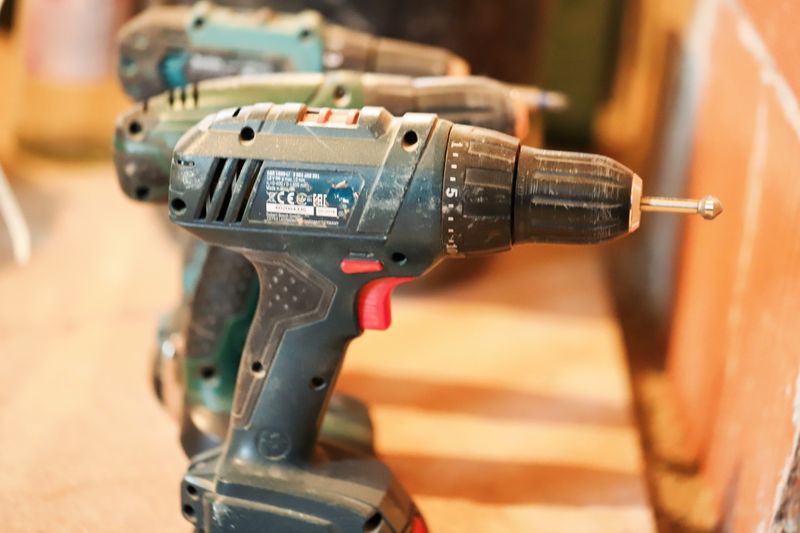
A cordless drill is not traditionally thought of as a plumbing tool, but any plumber — professional or DIY — will tell you it is one of the most-used items on the job. From drilling access holes through joists for pipe runs to driving screws into framing for pipe hangers, from operating hole saws for large-diameter penetrations to mixing mortar for tile work, a quality cordless drill or impact driver dramatically speeds up plumbing jobs.
The question is not whether you need one. The question is which one performs best for plumbing-specific demands.
What Makes a Drill Good for Plumbing?
Plumbing work puts specific demands on a cordless drill that general carpentry does not always require:
High torque for hole saws. Drilling 2-inch, 3-inch, or 4-inch holes through framing for drain pipes requires serious torque. Hole saws are slow and demanding — a drill without enough torque will stall and overheat.
Compact size. Plumbers regularly work in tight spaces: under sinks, inside wall cavities, in crawl spaces. A shorter, lighter drill reaches where a full-size model cannot.
Clutch control. When driving screws into pipe hangers or plastic trim, you need a clutch to avoid overdriving and splitting material.
Battery life. Plumbing jobs often take all day. You need a battery platform with enough capacity to keep you working without constant interruptions.
Variable speed and reverse. Essential for drilling into different materials and for backing out bits without stripping.
Drill vs. Impact Driver for Plumbing
Many plumbers carry both, and for good reason.
Drill/driver: Better for drilling holes (especially with spade bits and hole saws), more precise clutch control, works well with large bits.
Impact driver: Better for driving long screws and lag bolts, significantly more torque in a smaller package, but not ideal for hole saws (the impact mechanism can break bi-metal hole saws prematurely).
For most homeowners: A quality drill/driver is the more versatile choice for plumbing. If budget allows, adding a compact impact driver is worthwhile.
Top Cordless Drills for Plumbing
1. DeWalt DCD791D2 20V MAX XR Compact Brushless Drill/Driver
Best overall for plumbing tasks
DeWalt’s 20V MAX XR brushless drill is the workhorse choice of professional plumbers across the country. The brushless motor delivers 460 unit-watts-out (UWO) of power — enough torque to drive 2-inch hole saws through dimensional lumber without bogging down.
Key specs:
- Voltage: 20V MAX
- Chuck: 1/2-inch single-sleeve ratcheting
- Speed: 0–550 / 0–2,000 RPM (two-speed)
- Torque: 60 ft-lbs
- Weight: 3.4 lbs (with 2.0 Ah battery)
- Clutch settings: 15+1
- Battery included: Two 2.0 Ah batteries + charger
Why it works for plumbing: The compact head length (7.9 inches) fits into most under-sink cabinets. The 1/2-inch chuck handles any spade bit or hole saw you will need for pipe work. The two-speed gearbox lets you drop to low gear (550 RPM max) when running large hole saws — exactly what you want for controlled, high-torque drilling.
The 20V MAX battery platform is the most widely available in the industry, meaning you can share batteries with other DeWalt tools you likely already own.
Buy the DeWalt DCD791D2 on Amazon
2. Milwaukee 2804-22 M18 FUEL 1/2-Inch Hammer Drill/Driver
Best for heavy-duty plumbing and drilling into masonry
Milwaukee’s M18 FUEL line uses a proprietary POWERSTATE brushless motor that genuinely outperforms most competitors in sustained high-torque applications. The 2804-22 delivers 1,200 in-lbs of peak torque — more than enough for even the most demanding hole saw work through thick structural members.
Key specs:
- Voltage: 18V (M18)
- Chuck: 1/2-inch ratcheting
- Speed: 0–550 / 0–2,100 RPM
- Torque: 1,200 in-lbs (100 ft-lbs)
- Weight: 4.3 lbs (with 5.0 Ah battery)
- Clutch settings: 30+2
- Battery included: Two 5.0 Ah batteries + charger
Why it works for plumbing: If you are running large-diameter pipe penetrations through multiple joists or drilling into concrete for anchor bolts, this is the drill for the job. The hammer function handles masonry without a separate rotary hammer for lighter work. Milwaukee’s REDLINK PLUS intelligence prevents overload damage when a bit catches or binds — critical when using large hole saws.
The M18 battery platform is similarly massive, powering everything from Milwaukee pipe threaders to LED lighting systems.
Buy the Milwaukee 2804-22 on Amazon
3. Makita XFD131 18V LXT Brushless Compact 1/2-Inch Driver-Drill
Best compact option for tight-space plumbing
Makita built the XFD131 around a single design priority: get as much performance as possible into the smallest possible package. At just 7.1 inches in length, it is one of the shortest full-featured 18V drills on the market — and that matters enormously when you are working under a kitchen sink or inside a wall cavity.
Key specs:
- Voltage: 18V (LXT)
- Chuck: 1/2-inch single-sleeve
- Speed: 0–500 / 0–1,900 RPM
- Torque: 530 in-lbs (44 ft-lbs)
- Weight: 3.5 lbs (with 2.0 Ah battery)
- Clutch settings: 21+1
- Battery included: One 3.0 Ah battery + charger
Why it works for plumbing: The short head length is the headline feature. Under-sink work, inside cabinet spaces, and awkward crawl space angles all become much more manageable with a 7.1-inch drill versus a 9-inch one. The LXT battery platform is one of the largest in the industry — Makita makes over 275 tools that share it.
Torque is on the lower end of this comparison, but adequate for all but the most demanding hole saw work through thick stock. For homeowner-level plumbing, it handles everything you will realistically need.
Buy the Makita XFD131 on Amazon
4. Ryobi PCL206K2 ONE+ 18V Brushless 1/2-Inch Drill/Driver
Best budget option for homeowner plumbing
Ryobi does not try to compete with DeWalt and Milwaukee on professional job sites, and that is fine. For the homeowner who needs a reliable drill for occasional plumbing projects and general home maintenance, Ryobi’s brushless ONE+ drill delivers surprisingly capable performance at a fraction of the professional-brand price.
Key specs:
- Voltage: 18V (ONE+)
- Chuck: 1/2-inch keyless
- Speed: 0–500 / 0–1,800 RPM
- Torque: 60 ft-lbs
- Weight: 3.4 lbs (with 2.0 Ah battery)
- Clutch settings: 24+1
- Battery included: Two 2.0 Ah batteries + charger
Why it works for plumbing: The ONE+ battery platform covers over 280 tools — the widest compatibility of any battery system. The brushless motor adds efficiency and longevity compared to Ryobi’s older brushed models. For drilling through wood framing, driving screws into pipe hangers, and operating standard-size hole saws for 1/2-inch and 3/4-inch pipe, this drill is entirely adequate.
Where it falls short is sustained high-torque work — running a 3-inch or 4-inch hole saw through multiple thick joists will strain it. For that kind of work, the DeWalt or Milwaukee are better investments.
Buy the Ryobi PCL206K2 on Amazon
Impact Drivers Worth Adding
If you want to complement your drill with an impact driver, here are the best options by brand:
DeWalt DCF887D2: The 20V MAX XR brushless impact driver. Three-speed, 1,825 in-lbs of torque, 2.1 lbs without battery. Buy on Amazon
Milwaukee 2853-22: M18 FUEL brushless impact driver. 2,000 in-lbs of torque, four-mode DRIVE CONTROL, 2.25 lbs without battery. Buy on Amazon
Makita XDT16T: 18V LXT brushless impact driver. 1,600 in-lbs, Assist Mode prevents stripping, 2.9 lbs. Buy on Amazon
Accessories Every Plumber Needs for Their Drill
Buying the right drill is step one. Outfitting it with the right accessories determines how useful it actually is on plumbing jobs.
Hole Saw Kit
For drilling pipe penetrations through wood framing. You need:
- 7/8-inch for 1/2-inch copper pipe
- 1-1/8-inch for 3/4-inch copper pipe
- 1-3/8-inch for 3/4-inch CPVC
- 2-inch for 1-1/2-inch ABS/PVC drain pipe
- 3-1/8-inch for 3-inch drain pipe
- 4-1/8-inch for 4-inch drain/vent pipe
Recommended: Lenox Tools Bi-Metal Hole Saw Kit — includes the most common sizes and holds up well against wood and metal.
Spade Bit Set
For smaller pilot holes and 1/2-inch to 1-inch pipe penetrations. A quality set from 1/4-inch to 1-1/2-inch covers most needs.
Recommended: Irwin Tools Speedbor Spade Bit Set
Right-Angle Drill Attachment
This accessory converts your standard drill into an angled drill, allowing you to work in spaces where you cannot fit the drill body. Essential for drilling between joists and in other confined framing spaces.
Recommended: Ryobi A10RA2 Right Angle Drill Attachment — fits most 3/8-inch and 1/2-inch chuck drills.
Comparison Table
| Model | Torque | Weight | Battery | Best For | Price Range |
|---|---|---|---|---|---|
| DeWalt DCD791D2 | 60 ft-lbs | 3.4 lbs | 20V MAX | Overall best | $150–$200 |
| Milwaukee 2804-22 | 100 ft-lbs | 4.3 lbs | M18 | Heavy-duty | $200–$280 |
| Makita XFD131 | 44 ft-lbs | 3.5 lbs | 18V LXT | Tight spaces | $130–$180 |
| Ryobi PCL206K2 | 60 ft-lbs | 3.4 lbs | 18V ONE+ | Budget/DIY | $80–$130 |
Tips for Using a Drill on Plumbing Jobs
Use low gear for hole saws. High RPM and large-diameter hole saws are a bad combination. Drop to low gear (typically the higher torque setting) and let the saw do the work at lower speed. This extends saw life and prevents dangerous kickback if the saw catches.
Drill pilot holes first. When using large hole saws, a small pilot hole (usually 1/4 inch) guides the center bit and reduces the force needed to start the cut.
Mind your pipe spacing. Building codes typically require notches or holes for pipes to maintain structural integrity. Holes through joists should be centered and no larger than one-third of the joist’s depth. For a 10-inch joist, that means a 3-1/3-inch maximum hole diameter.
Keep a second battery charged. Running large hole saws drains batteries quickly. Professional plumbers keep at least two batteries per tool in rotation.
Use a bit with a depth stop or tape your bit. When drilling through a wall cavity, you do not want to drill all the way through the finished surface on the other side. Wrap masking tape around the bit at the desired depth as a visual stop.
Final Recommendation
For most homeowners tackling plumbing projects, the DeWalt DCD791D2 hits the ideal balance of power, size, battery platform, and value. If you already own DeWalt batteries, the case for it is even stronger — you can buy a bare-tool version and save significantly.
If you are a serious DIYer or semi-professional who regularly works on demanding installations, step up to the Milwaukee 2804-22. The extra torque and 30-clutch-setting precision justify the higher price.
On a budget? The Ryobi PCL206K2 handles homeowner-scale plumbing work without complaint, and the ONE+ platform means you will find batteries and compatible tools for years to come.

Flow Control HQ Editorial Team
Independent trade-focused editorial team